Chef Almatino - Tampah Hills
Thoroughly Indonesian
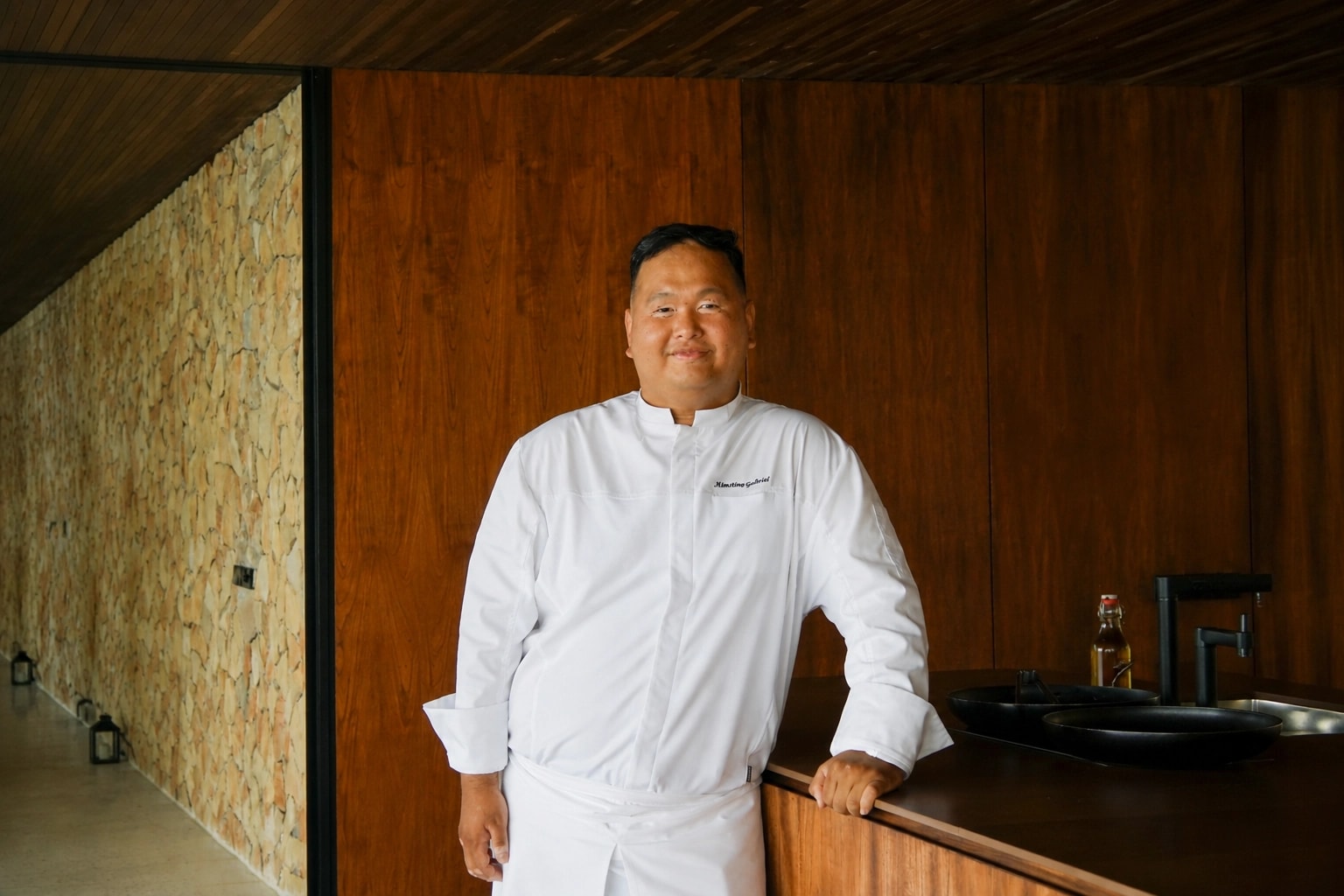
Almatino, or ‘Tino’ has loved cooking since he was a child. He remembers making nasi goreng (fried rice) from an early age and he was far more interested in food than he was in traditional school subjects. His mother recognised this and, as he extended his cooking skills, she encouraged him to become a chef. Tino spoke with mylombok recently and talked about his career in food.
Could you tell us something about your background?
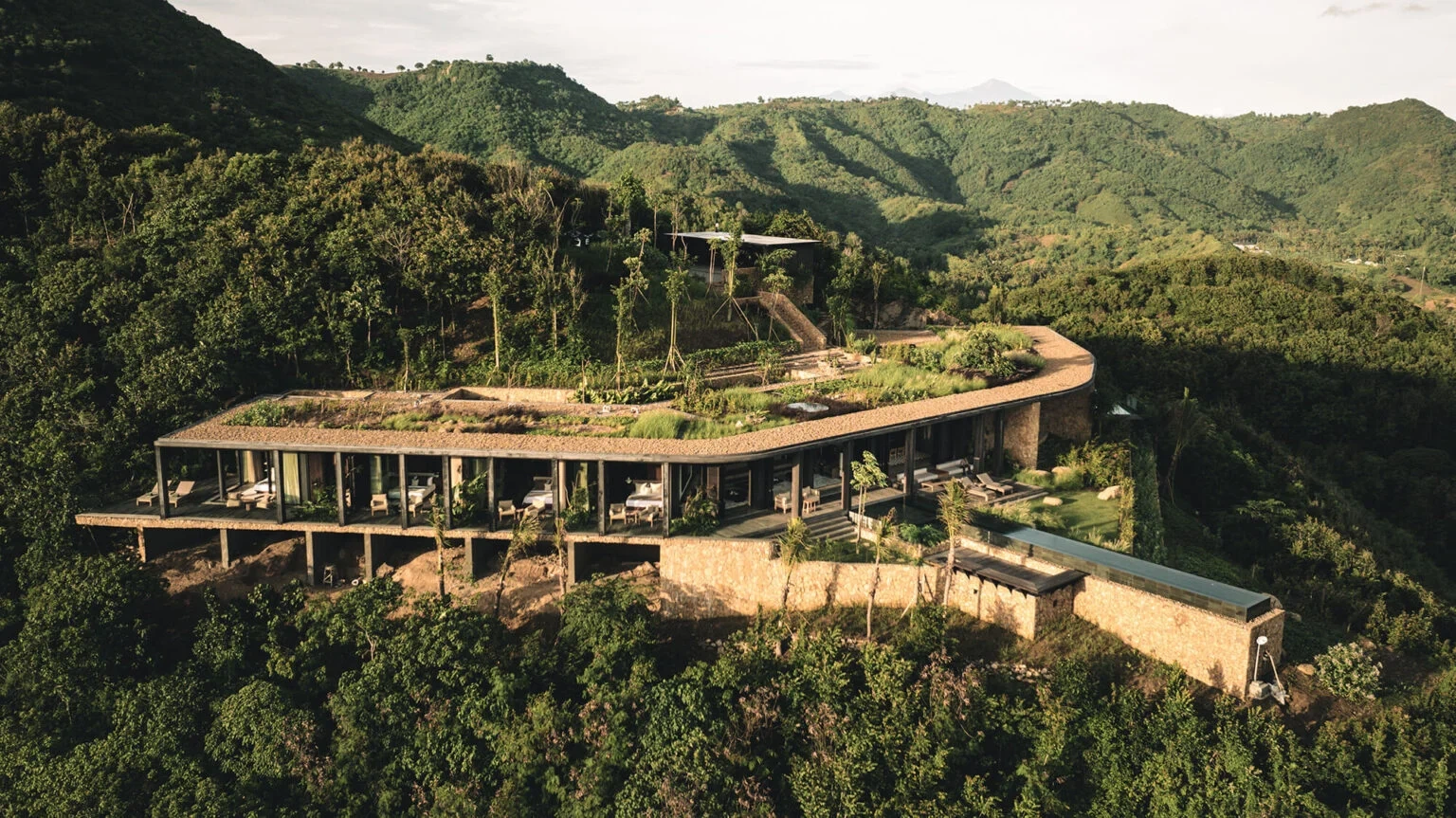
It’s really all about cooking and learning to cook better. I’ve worked at a number of places: in Dubai with the Jumeriah Group, at the Grand Hyatt and Jamie Oliver Kitchen in Bali. I was more recently at The St Regis in Jakarta. Now, of course, I am at the Tampah Hills Villa Resort, in South Lombok.
How would you describe or define your style of cooking?
It’s a good question…. First, I’d say I am an Indonesian chef. I like to cook modern Indonesian cuisine, and that’s because, at the end of the day, I have Indonesian blood. I’d also like to introduce more of an international flavour to Indonesian cuisine, but not really in the ‘fine dining’ way; I like to keep it more rustic. I want to make it more ‘funky’, more exciting.
Where do you find inspiration for your dishes?
My inspiration always comes from the area where I work. For example, I’m now working in Lombok so I need to know about the best ingredients that come from Lombok and use them. Lombok has some of the best seafood in Indonesia. We get live seafood here and it’s amazing. Even when I was working in Jakarta, to buy the freshest fish and seafood, I got it from Lombok and had it brought to Jakarta. Now that I’m living in Lombok, I’m very interested in bringing more seafood dishes to the menu, especially for all the ‘foodies’ in Lombok. I want to let them taste the best seafood they could possibly find.
There are so many other good products that come from Lombok and I often feel people don’t really appreciate what they have here, or they don’t know much about it. I want to introduce these products to the guests at Tampah Hills. Even the salt is local; it comes from East Lombok, which is very famous for it. And the local vegetables are excellent; we make traditional Sasak dishes, such as Beberok Antap, a spicy dish made from long beans, tomato, pepper and shrimp paste. You cannot get some of these dishes in any other places around Indonesia.
So, yes, I get my inspiration from Lombok.
Do you have a particular ‘philosophy of cooking’?
‘Honest cooking’ is my philosophy. In the end, the honest dish always goes to your heart. I don’t lie to the guests; I don’t lie to myself. I just want to give the guests the best of what I can do.
What’s the best piece of cooking-related advice you’ve ever received?
The best advice came from my mentor. He said: ‘Don’t forget your roots: where you come from, where you have worked and where you are now’. For me, this is very personal. In the beginning, I tried to be the best chef. I wanted to mix western dishes and Asian dishes and create a lot of things. My chef asked me: ‘Do you think this broccoli comes from Southeast Asia? Do you think this ingredient is going to be good for your dish? And it made me realise I had forgotten my roots. That’s why I want to introduce more Indonesian cuisine. It’s closer to my roots.
Tell us about Biras Beach Bar & Restaurant and your concept for the menus
At Biras Restaurant, the concept for the menu is all-day dining, so we divide up the menu. A lot of the menu is Western, some is Indonesian. There are breakfast items, lunch and dinner dishes, soups, smoothie bowls, rice bowls, tapas and desserts. We are going to introduce the ‘private chef’ concept. You should try it. Why? Because you’ll be sitting in your beautiful villa and you will have a four or five course menu. It will be amazing. And of course we still have the room-service dining menu.
Basically, the guests can choose anything they want. I ask them whether they prefer Indonesian, or Western or Asian cuisine. I give them a lot of options.
How do you incorporate local ingredients or regional culinary traditions into your dishes?
The food I most like to cook is Indonesian – nusantara food. Ideally, I want 60-70% of everything I use to come from Lombok. From my staff, I learn about traditional local dishes from the Tampah Hills area in the south of Lombok. I want to increase my skills and learn to cook them but perhaps change the way they are presented to the guests.
Indonesia has lots of islands, though, each with a different cuisine and different ingredients, so I want to keep learning. That’s why I don’t want to be too specific. But I just want to say I’m an Indonesian chef.
What are your favourite ingredients?
I like salt. That’s why I am trying to learn more about salt. I also like ketchup. We have more than 100 types of ketchup around Indonesia. I don’t make my own ketchup, though; it’s very difficult. I have a collection of more than 25 sweet soya sauces, or kecap manis as we say in Bahasa Indonesian. They are all from different regions of Indonesia. Every ketchup has a different taste, and I find this very interesting.
Which are your ‘must have’ kitchen gadgets?
My uniform. For me, as a chef, the chef uniform is the most important thing. The way I look is representative of where I am working. Here at Tampah Hills I need to look smart and professional.
What is most rewarding about your job?
After I have explained the food and talked with the guests, I ask them for feedback. And when they tell me the food is amazing and I see their plates are clean it’s a big reward for me.
What’s your approach to leading a kitchen team in a high-pressure luxury environment?
I put people first. We work with people, and we need to teach them, and understand what’s going on around them. The environment in the kitchen is the most important and when you put people first, they respect you and they will try with all their heart to make everything good.
How do you feel sustainability is reshaping the future of fine dining?
Everybody is talking about sustainability. It’s not easy to do. We need to take care of our nature and animals, and to use land sustainably. To be honest, it’s difficult to control all of these things. Everybody likes to eat tenderloin, rib-eye and sirloin. From 300 kilos of beef can you imagine using maybe only 20 kilos? That’s not sustainability.
We need to source other types of protein as well. It is quite challenging, but I think we can do it together. Sustainability involves everyone –farmers, fishermen, chefs, even those who eat the food.
What are your hopes/ plans for the future?
I have been planning to open two more restaurants. One is farm-to-table and the other will be at the top of the mountain, with a 360-degree view, so guests can see all the land, the mountains and the sea. It will be semi-fine-dining with Indonesian cuisine using western techniques. We’ll serve high tea as well as dinner and have a nice bar outside.
Apart from cooking and creating dishes, what other things do you really enjoy?
I like going to the market in the morning and searching for fresh ingredients. I want to see how people live, how they interact. I really like that; it’s exciting.
Which foods do you really love to eat? Anything you would never eat?
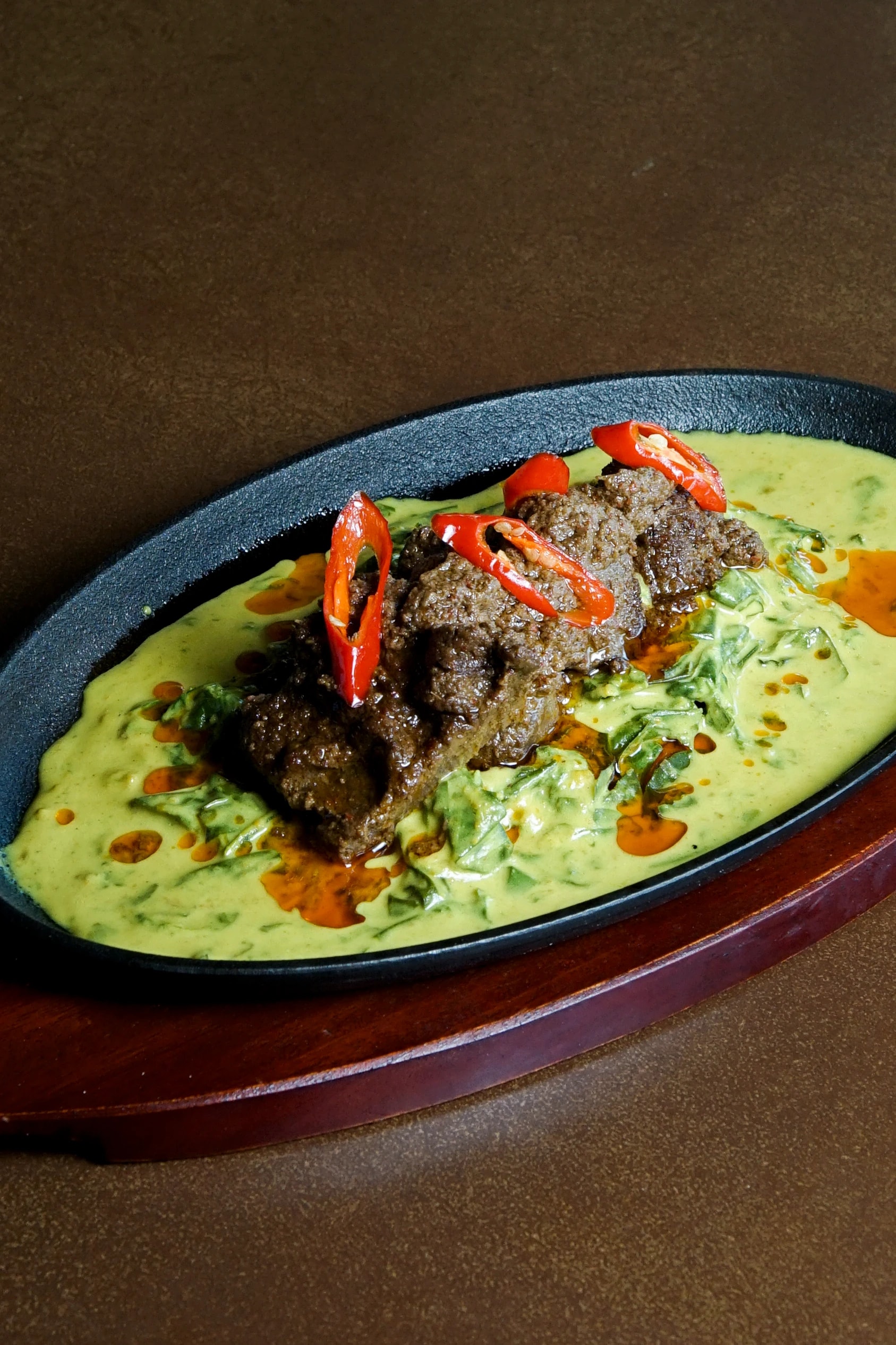
I love beef rendang and Padang food the most. And, as a person from Jakarta, I also like soto betawi (a creamy beef soup).
I like to try everything. I have eaten a lot of exotic food – even crocodile. I am a chef and I need to know what’s out there..
Is there a particular person you would love to cook a meal for?
Heston Blumenthal, my favourite celebrity chef. When I was still at high School, I knew the kitchen better because I watched his videos. I saw him making ice cream with nitrogen. It was beyond my imagination. As a chef, he’s like a magician – my hero at the time. I’d like to meet him, to shake his hand, that’s all. And if I could cook for him, why not?
Who would you choose to cook for you?
My mentor: Oscar Perez. I like his amazing food; I like everything he makes. You can have fine dining, but not every single day. You need to have comfort food, too. Oscar Perez always cooks the food in the fine dining way but he makes it as comfort food.
What would you say are the most important qualities that make a successful chef?
First, you need discipline. Second, you cannot be a successful chef without sacrificing your time. You need to spend a lot of time in the kitchen. You need to know how to heat the grill and use the woks. Third, you really need to know how to motivate yourself to be the best.
Do you have any tips for budding chefs?
Yes. Have big dreams; don’t limit yourself. And also be more creative than the rest. And you need to know your ingredients – for example, is A good to mix with B or not? Don’t just think about it; try it.
If you hadn’t become a chef, what do you think you would be doing right now?
I really don’t know. I really think I have made the right choice to be a chef.
After hearing Almatino’s story, we head into the kitchen to discover one of his recipes.
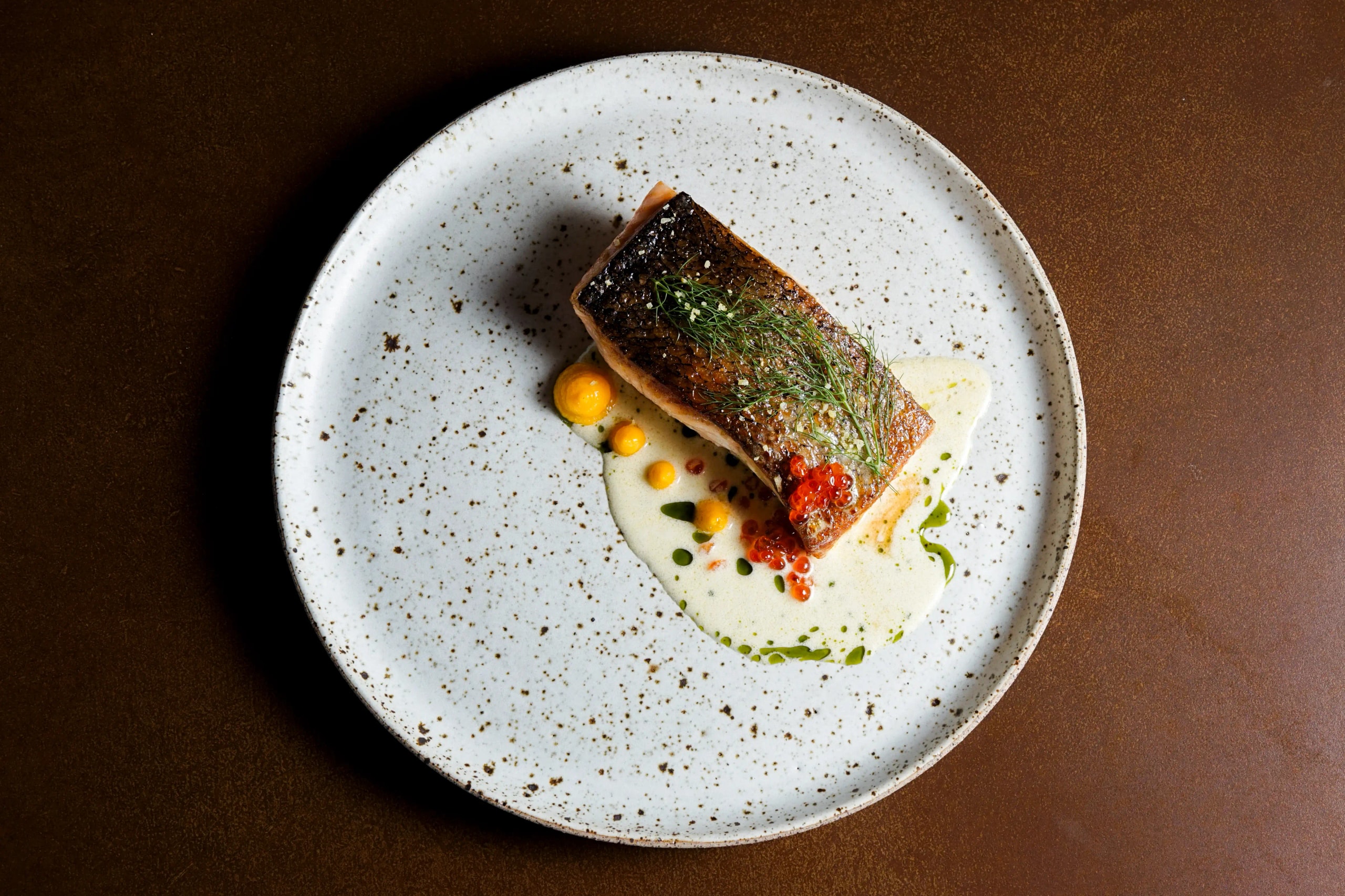
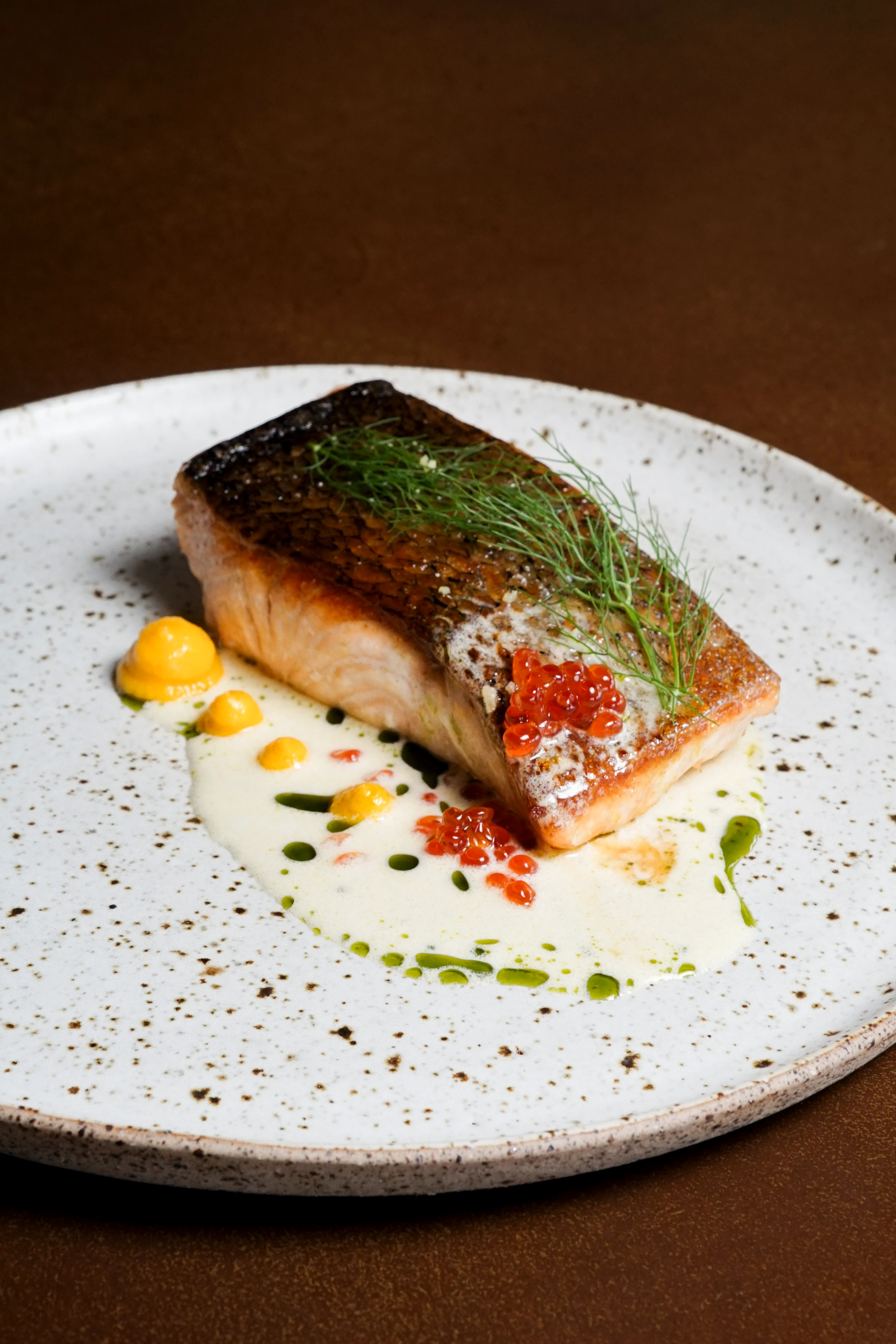
Fish à la Beurre Blanc
Ingredients:
Fish
- 1 pcs (200g) Fresh Catch of the Day
- 1 pcs Lemon
- 15 ml Olive Oil
- 5 gr Butter
- Salt to taste
- White Pepper Powder to taste
Carrot Puree
- 200 gr Carrot
- 50 gr Butter
- 15 ml Olive Oil
- 20 ml Water
- 5 gr Garlic
- 2 gr Salt
- 1 gr White Pepper Powder
Beurre Blanc Ikura
- 5 gr Chopped Shallots
- 30 gr Ikura
- 50 gr Cold unsalted butter block
- 15 ml White wine vinegar
- 20 ml water
- Salt to taste
- White pepper powder to taste
Method
- Prepare the Fish: Wash the fresh fish, fillet the flesh, pat fillets thoroughly dry with paper towel and season generously with salt, white pepper powder, lemon juice.
- Heat a heavy skillet or cast-iron pan over medium-high heat. Add olive oil until shimmering.
- Seared Skin-Side Down: Cook undisturbed for 3-4 minutes until skin is golden and the fish easily releases. If it sticks, it’s not ready.
- Carefully flip the fish. Add butter& lemon juice. Then tilt the pan and spoon the melted butter over the fish(basting).
- Cook for another few minutes, basting until the fish is opaque and flakes easily with the spatula.
- Let it rest briefly before serving, add a squeeze of lemon juice for brightness.
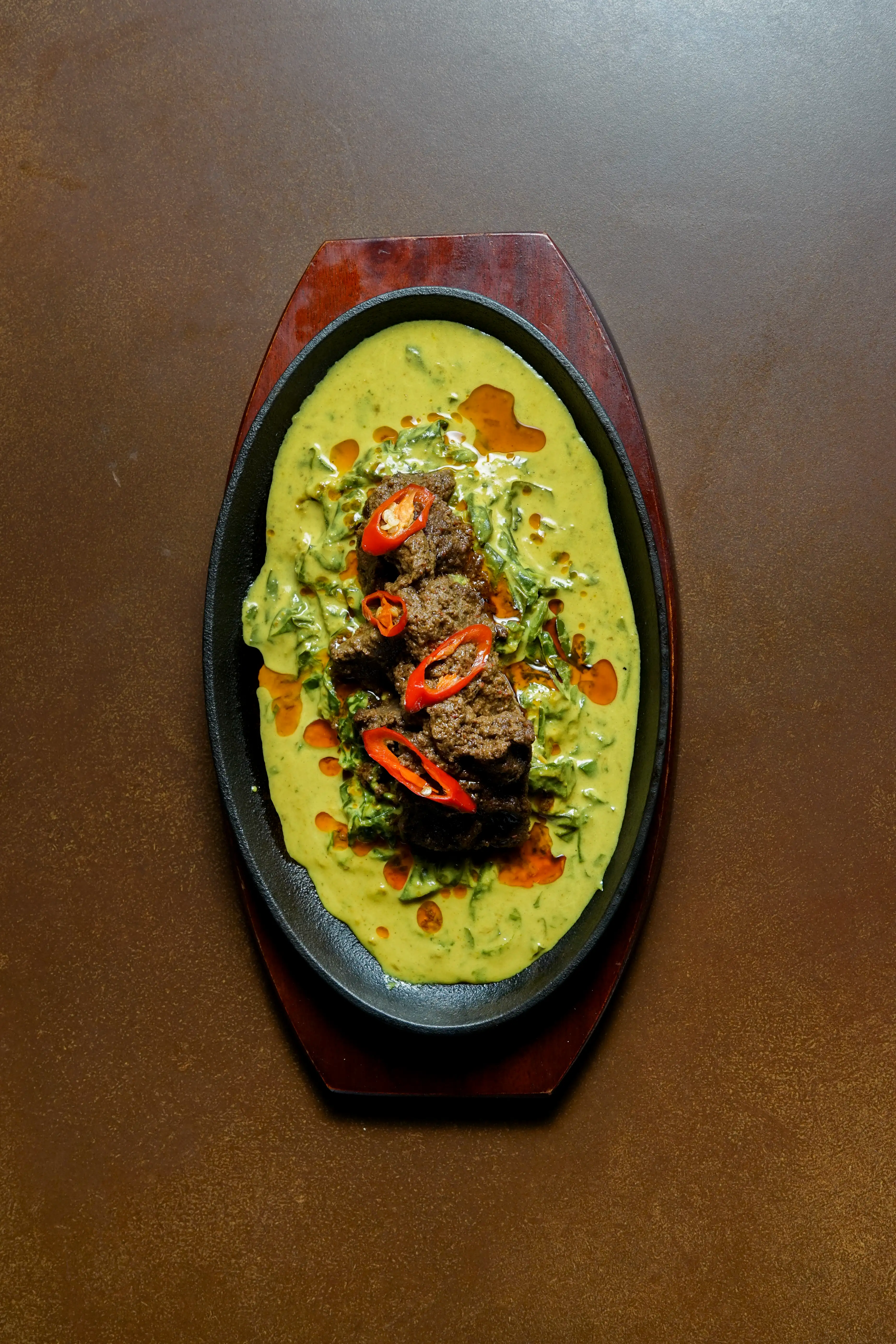
Rendang Sumatra
Ingredients:
- 1kg Topside Beef Chunks
- 80 gr Big Red Chili
- 20 gr Curly Red Chili
- 25 gr Garlic
- 50 gr Shallots
- 10 gr Candle Nuts
- 5 pcs Lime Leaves
- 10 gr Lemongrass
- 3 gr Ginger
- 4 gr Galangal
- 1 pcs Turmeric Leaves
- 10 gr Kari Minang powder
- 2 pcs Star Anise
- 1 pcs Cinnamon Stick (Medium)
- 30 gr Grated Coconut
- 300 ml Coconut Milk
- 70 ml Cooking oil
- 3 gr Brown Sugar
- 3 gr Beef Knorr
- 4 gr Salt
- 3 gr Black Pepper Powder
Cooking Method:
- Prepare the spice paste: Blend or grind chilli, shallots, garlic, ginger, galangal, into a thick paste.
- Sauté aromatics & paste: Heat cooking oil in a heavy pot or wok, sauté whole aromatics (lemongrass, star anise, cinnamon stick) then add the spice paste and cook until fragrant and thickened.
- Brown the Beef: Add beef chunks to the pot, stir to coat with paste, and cook until browned.
- Add Liquids & Simmer: Pour in coconut milk, add lime leaf, brown sugar, salt, black pepper powder, and beef Knorr) bring to a boil, then reduce heat to a very gentle simmer, partially covered for several hours (2-4+).
- Reduce & Caramelize: Continue simmering uncovered, stirring more frequently as liquid evaporates. The sauce thickens, darkens, and the oil separates.
- The beef should be incredibly tender and the sauce reduced to a dry, flavourful glaze. Serve it hot with steamed rice and Cassava leaves curry.

mylombok
Discover this accommodation
Related business directory




Chefs
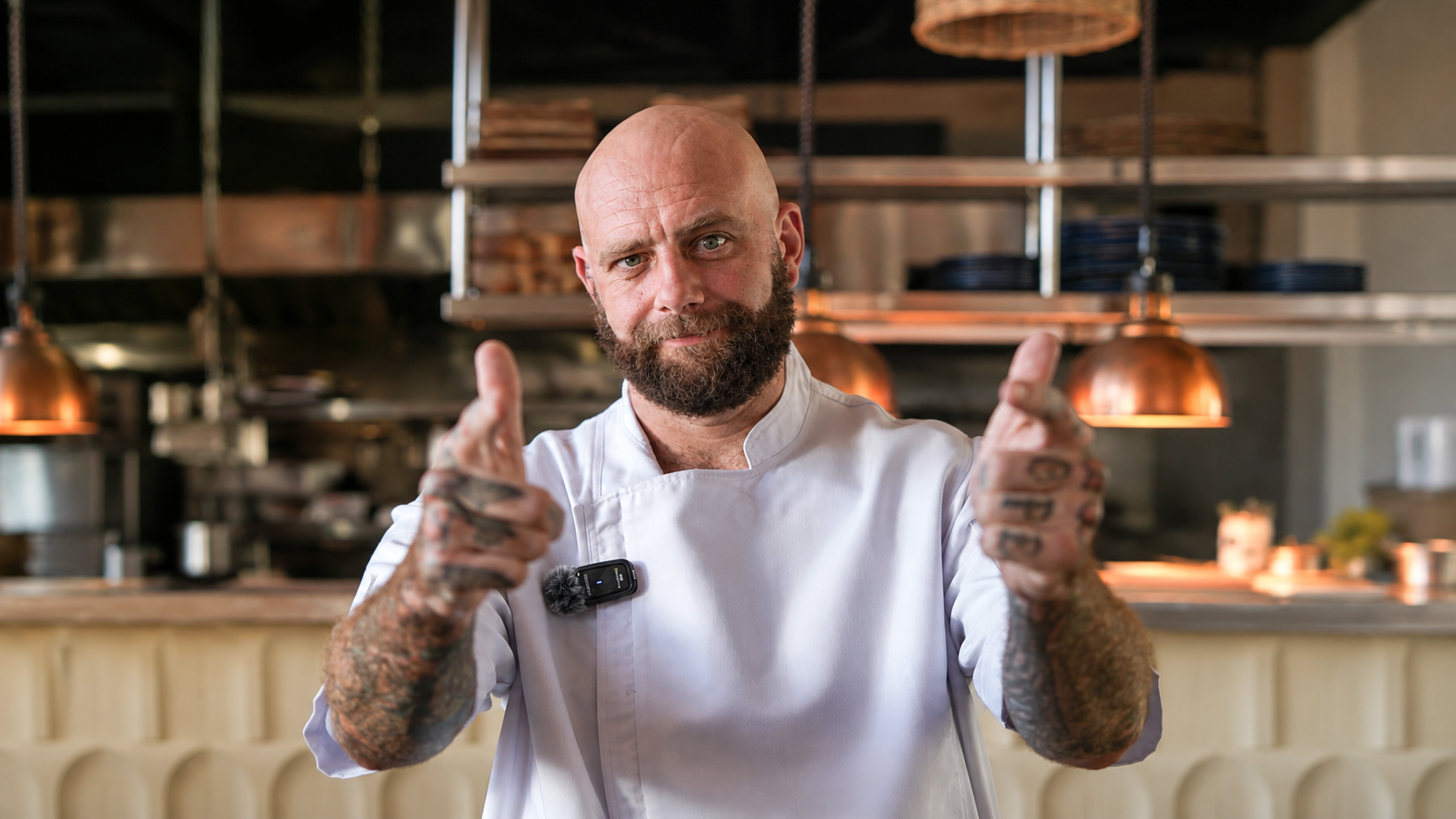
Chef Phil Mowforth – Cocana Resort and Kuara Lombok
Meet Chef Phil Mowforth, Executive Chef for The Guest Society, as he shares his culinary journey, cooking philosophy and work across Cocana Resort and Kuara Lombok.
Stir it up
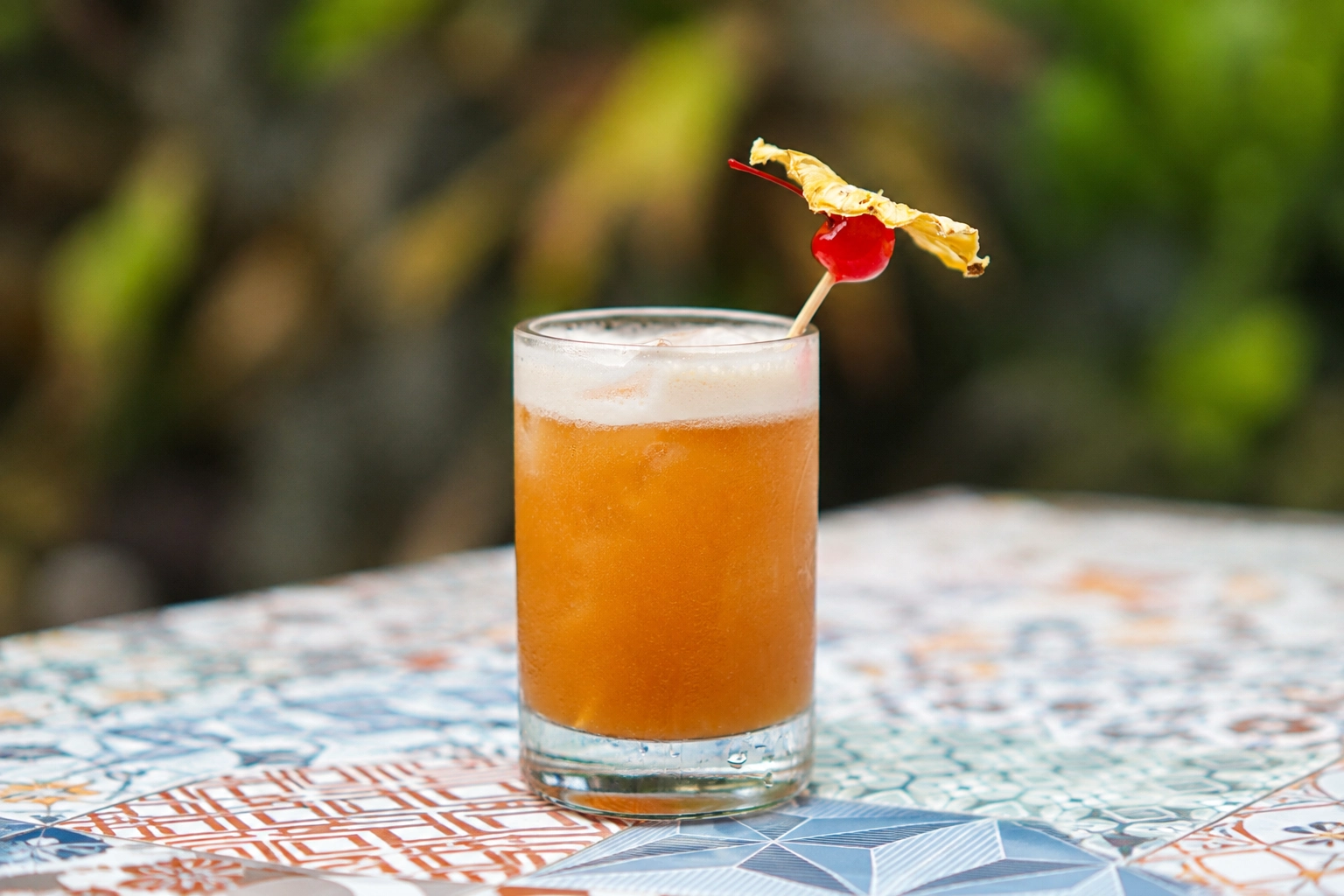
Klub Kembali - Stories and recipes from a bar owner in paradise…
Travel beyond the polished version of paradise and discover how unexpected detours, local connections and unplanned experiences can reveal a more authentic side of Lombok.

Restaurants
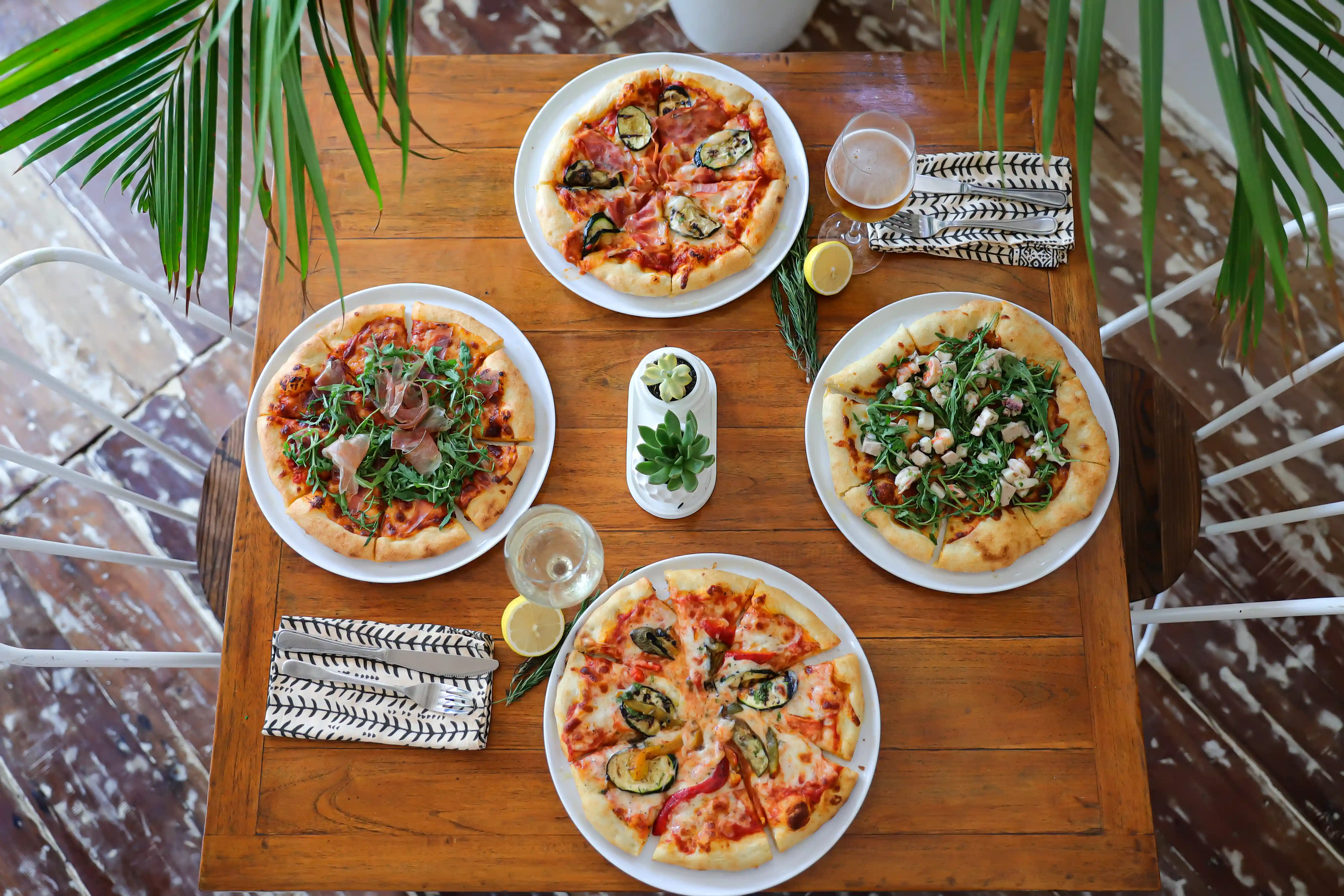
PRONTO Pizza - Selong Belanak
A taste of authentic Italy with a tropical twist
Restaurants
L’Osteria dell’Isola Restaurant - Gili Trawangan
Hidden authentic Italian foodie haven