Chef Phil Mowforth – Cocana Resort and Kuara Lombok
Getting (And Eating) Better Together
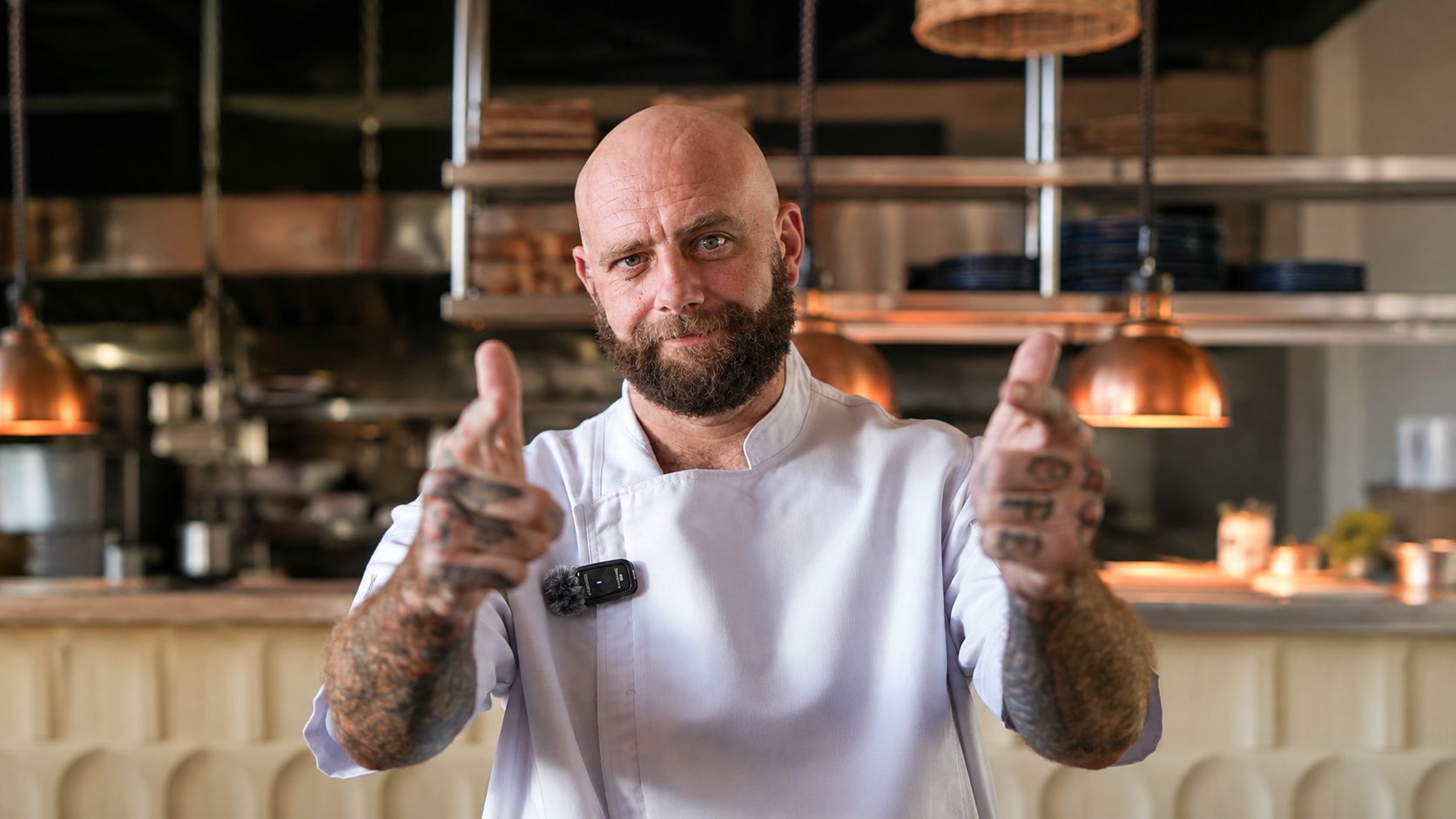
Phil Mowforth has lived in Bali for ten years. He is now Executive Chef for The Guest Society, a hospitality management company with a portfolio which includes the farm-to-table dining in Kuara Lombok’s beachfront restaurant, and two restaurants at Cocana Resort on Gili Trawangan, with a third restaurant onsite opening soon.
Recently, he spoke with mygilis and shared his love of cooking and eating.
Tell us something about your background and your career so far
I was born and raised in Hull, up in the north of England. I started in hospitality young, at only 13 years old as a pot washer in an Italian restaurant. Niko, the head chef there, taught me how to fillet a fish, and I think that’s the moment the whole thing clicked. The owners were good to me and put me through college, so I was studying full-time and working full-time at the same time. That was around twenty years ago now.
After I graduated I moved around, working my way up through kitchens for 8 years in Manchester. Then I landed a job as a junior sous-chef out in the Caribbean, cooking for Richard Branson. It was a brilliant experience, working with no menus, just eight chefs cooking everything that guests fancied. After a brief return to England, I made my way to Bali, worked in a few places with a few interesting people and somewhere along the way, I completely fell in love with Bali and Indonesia, the culture, the people, the food, all of it.
So I opened my own restaurant, Downtown, in Kedungu. But then I came across what The Guest Society were doing, building exciting, original food brands with a real connection to the places they’re set in, so I jumped at the opportunity. Now, I’m their Executive Chef.
Tell us about your role at Cocana Resort and Kuara Lombok?
These days it’s more about putting my experience and knowledge to work, being creative and running the show. Kuara is very Indonesian-led, with its own farm and local producers, so I’ve been bringing Western technique together with Indonesian ingredients, and teaching the team the value of good food and proper training, getting them to taste and understand their own palate. There’s a real focus on bringing the teams up to that standard, the regimented kind of kitchen you’d find in a Michelin restaurant.
At Cocana Resort, there are several dining options for guests. Pacifica is an all-day spot, with Mediterranean and Indonesian dishes. The Cocana Sunset Club, on the beachfront is very lively, with mezze, tapas, fresh grilled seafood – lots of sharing, regulars BBQ, and DJs coming soon. Most of our produce is now sourced locally from Lombok, we only really go to Bali for the more unique special ingredients.
And we’re really excited about a new Japanese restaurant, Sensei Ikan. It’s an omakase-style 12-course menu with drinks pairing, very elegant and with limited seating. Guests are going to love it.
How does that work for you? Being in charge of multiple restaurants at the same time?
Pretty well. I enjoy the variety and the challenges. I’ve trained the teams so they can run their own kitchens. A lot of them have been with me for ten years now, so there’s real trust there.
How would you describe your own style of cooking? And do you have a particular ‘philosophy’?
It’s rooted in the classics, with a bit of fusion on top. I’ll put a sambal with an Italian dish, or do a beef rendang with a salsa verde. I like to finish with a little acid by using herbs.
In terms of philosophy, I like to stay open – trying and changing until I eventually get it. I did that when I left the fine dining scene and started to cook Mexican food – complete opposites! Trial and error. Always evolving. There is no right way. I just make sure the first guest and last guest always get the same standard.
The way I teach my staff is similar. I explain to them how to cook something, then they have to taste it. If it doesn’t taste good, they don’t serve it, even as a decoration. If it’s on a plate it should be edible.
Which dishes do you most like to cook and eat?
I really love Japanese cooking, that delicate balance you get with the flavours. And I love Indonesian street food, like gulai kambing (lamb curry), sate, or a BBQ fish. I love bakso (a mystery meatball) and nasi campur (mixed rice). On Sundays, I like making lasagna, or fresh pasta. I am not a great fan of eggs but generally there is nothing I won’t eat. I love all of it!
What are your favourite ingredients?
Indonesian sambals – you can use them as a base for anything.
Which are your ‘must have’ kitchen gadgets?
Tasting spoons. I always have my five spoons on me, and the chefs have theirs whenever we’re cooking together.
Where do you find inspiration for your dishes?
Mostly by travelling. I’m exploring the back streets, no matter which country I’m visiting. Here in Indonesia, I look for the warungs in the side streets and taste everything. I love to watch and learn from the ibus, that’s where real cooking happens.
What are the rewards, and the challenges, in your job?
Seeing guests enjoy the food and knowing you’ve given them that experience, that’s the biggest reward. The challenge is keeping everyone on the same page, all the time. People come to us to have a good time, and it’s on us to deliver it.
What’s the best piece of cooking-related advice you’ve ever received?
Taste it. Taste it again. Then taste it one more time. You can always add to a dish, but you can’t take things out.
Apart from cooking and creating dishes, what other things do you really enjoy?
Whenever I have the chance, I jump on my motorbike to explore Bali and Lombok. When I have a little more time, I venture further into Java. I’m a bit obsessed with tracking down the best bakso stalls. When I’m not on the road, my favourite place is the beach with my dog.
Who is your favourite celebrity chef?
The late Anthony Bourdain. I love the way he explored everything. He believed the best way to understand a place was through its people, food and culture. He would travel to Indonesia and eat sate in a warung and meet the locals. I would have loved to cook for him, sit at the table, enjoy the meal and listen to his travel advice.
What would you say are the most important qualities that make a successful chef?
Understanding what the guest wants. Being able to get it wrong and still bounce back. Good leadership, and really listening to what your team needs. And knowing how to move everyone forward together.
Do you have any tips for budding chefs?
Find the best restaurant you can and work there as a commis chef. Learn and master the basics. Don’t try to become an executive chef straight away. Spend your first five to ten years working in a restaurant, getting experience. Be a sponge; taste everything. Always sharpen your knives before you start. Know what the rules are before you think about breaking them. You end up cooking like the chefs you spend the most time with, so find yourself a good mentor.
What are your hopes and plans for the future?
Lombok’s culinary scene is moving fast right now, with a lot of new restaurants and new cuisines, and plenty of variety. It’s exciting to see how it is going to shape up. I want to keep growing and doing new things with The Guest Society, keep opening new restaurants, and raise the level to keep getting better together.
_____
After sharing his culinary journey, cooking philosophy, and experience working across Cocana Resort and Kuara Lombok, he also shares some of his favourite recipes with us. Here are the recipes he has shared:
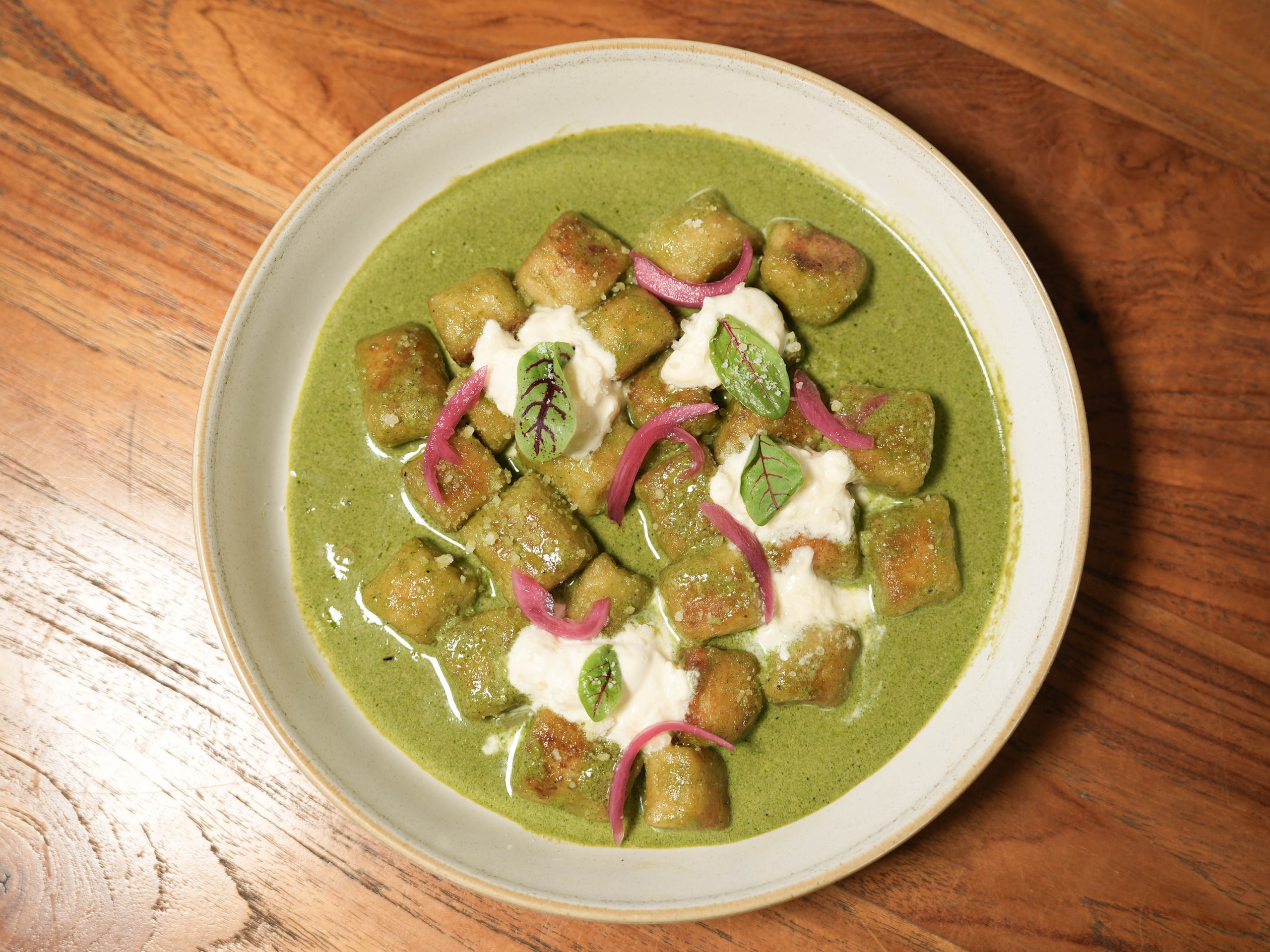
Wild Garlic Pesto Gnocchi
Ingredients
- 500gr wild garlic leafs (blanched)
- 100gr confite garlic
- 50gr pine nuts (toasted)
- 75gr parmesan
- 45gr Basil ( blanched)
- Olive oil
- Lemon zest
Method
- Weigh out all ingredients into separate bowls.
- Put a small pan of salted water on to boil enough to fit all the basil and garlic leaves in
- Get a bowl of iced water ready to refresh
- Put the wild garlic and basil into the boiling water for 10 seconds and then put into the ice water until cool
- Squeeze out all remaining water with a clean kitchen towel
- Transfer to a de-hydrator or a warm oven for 7 mins to remove remaining moisture
- Toast pine nuts in a pan until golden brown
- Put all ingredients into the pestle and mortar (except the olive oil)
- Make a paste adding the olive oil slowly to get desired texture
- Season with salt & pepper and lemon zest for freshness
- Leave to infuse overnight.
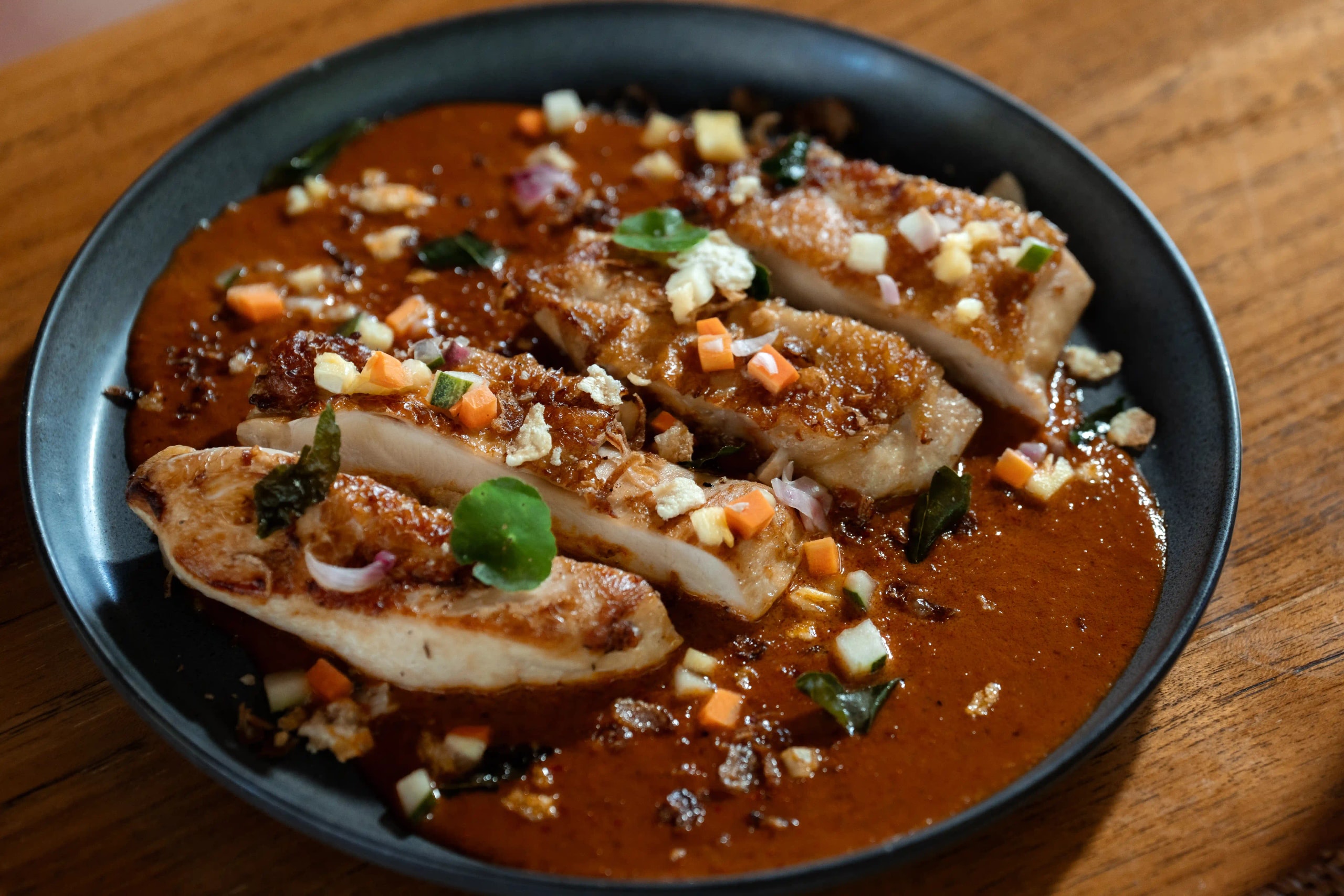
Ayam Taliwang
Ingredients
- 10 large red chilies (seeded for less heat if preferred)
- 3–5 bird’s-eye chilies (adjust for desired spice level)
- 8 small shallots, roughly chopped
- 4–5 garlic cloves, roughly chopped
- 1 medium tomato, roughly chopped
- 2 cm fresh kencur (aromatic ginger)
- 1 tsp toasted shrimp paste (trassi/terasi)
- 1 tbsp palm sugar
- 2 candlenuts
- 3 lime leaves
- 2 tbsp vegetable oil for sautéing
- Salt to taste
- 50 ml coconut milk or water
Method:
- Blend the aromatics: Combine red chilis, bird’s-eye chilies, shallots, garlic, tomato, kencur, and toasted shrimp paste in a food processor or blender. Blitz into a smooth paste.
- Sauté the paste: Heat the vegetable oil in a pan or wok over medium heat. Add the blended chili paste and lime leaves.
- Simmer and caramelize: Cook the paste, stirring constantly, for 5 to 7 min until fragrant and the raw tomato moisture evaporates.
- Season: Stir in the palm sugar and salt to taste. Add a splash of coconut milk if you prefer a looser, simmer-friendly sauce.
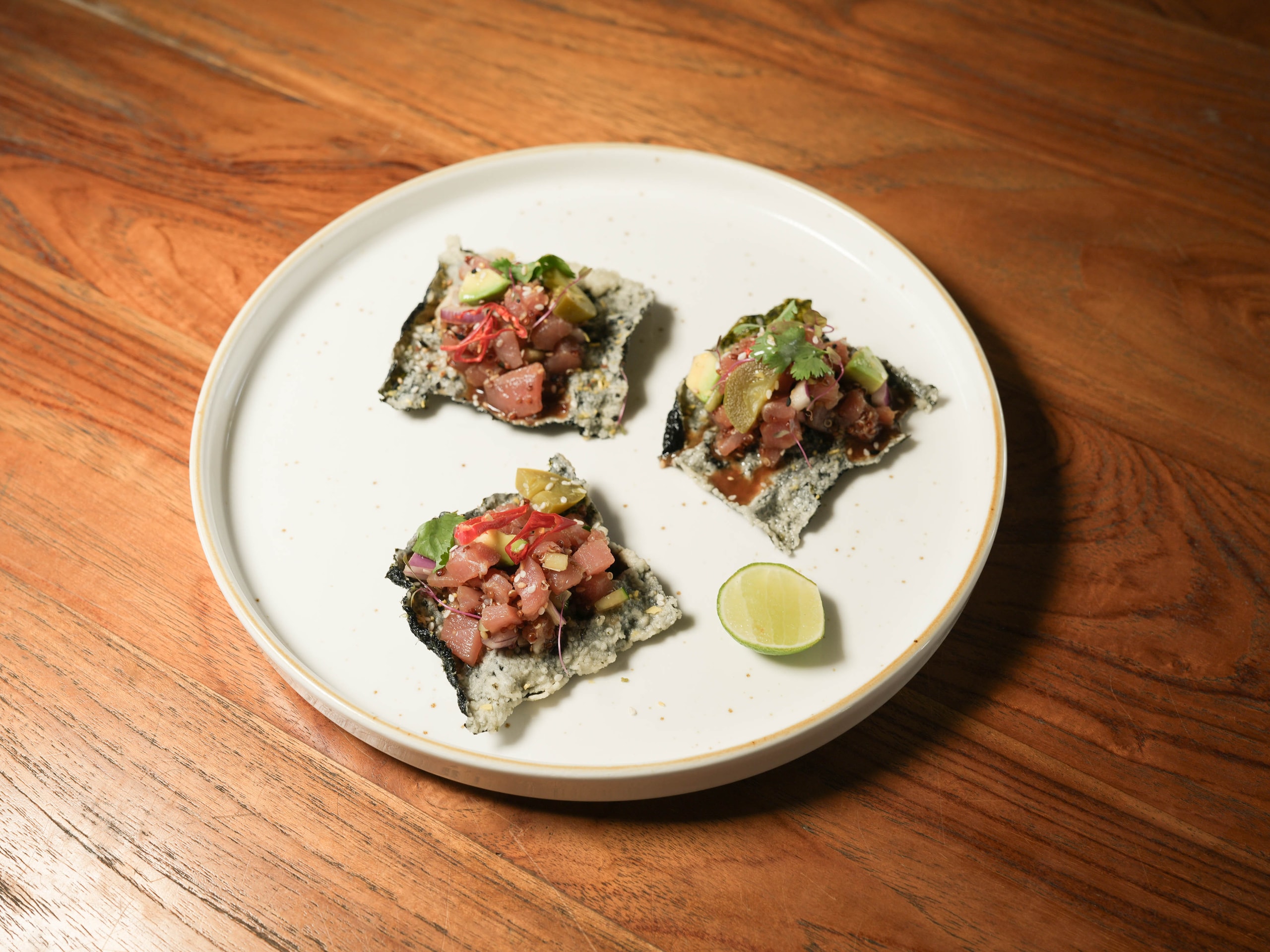
Cerviche
Ingredients
- 400ml kikoman soy sauce
- 200ml ponzu
- 1 stick Lemon grass
- 1 thumb ginger
- 8 lime leafs
- 1 red chilli
- 2 cloves garlic
- 100g palm sugar
Method
- Weigh out all ingredients into separate bowls
- Add the soy sauce and ponzu to a sauce pan
- Bruise and slice the lemon grass
- Peel and fine dice the ginger
- Slice the red chill (less spicy remove the seeds)
- Crush the garlic and add everything to the pan bringing to a light simmer (don’t boil)
- Once brought to a simmer remove from the heat and let infuse for 2 hours at room temperature
- Strain all the ingredients
- Taste and adjust seasoning as needed
Soy & ponzu dressing (for ceviches)
Ingredients
- 400ml kikoman soy sauce
- 200ml ponzu
- 1 stick lemon grass
- 1 thumb ginger
- 8 lime leafs
- 1 red chilli
- 2 cloves garlic
- 100g palm sugar
Steps
- Weigh out all ingredients into separate bowls
- Add the soy sauce and ponzu to a sauce pan
- Bruise and slice the lemon grass
- Peel and fine dice the ginger
- Slice the red chilli (if you want less spicy, remove the seeds)
- Crush the garlic
- Add everything to the pan
- Take to the stove and bring to a light simmer (don’t boil)
- Once brought to a simmer (roughly 90°C), remove from the heat
- Let infuse for 2 hours at room temperature
- Strain off all the ingredients
- Taste and adjust seasoning as needed
- Add to a squeeze bottle ready to be used in your next ceviche
- We normally use it in a tuna tartare at Pacifica
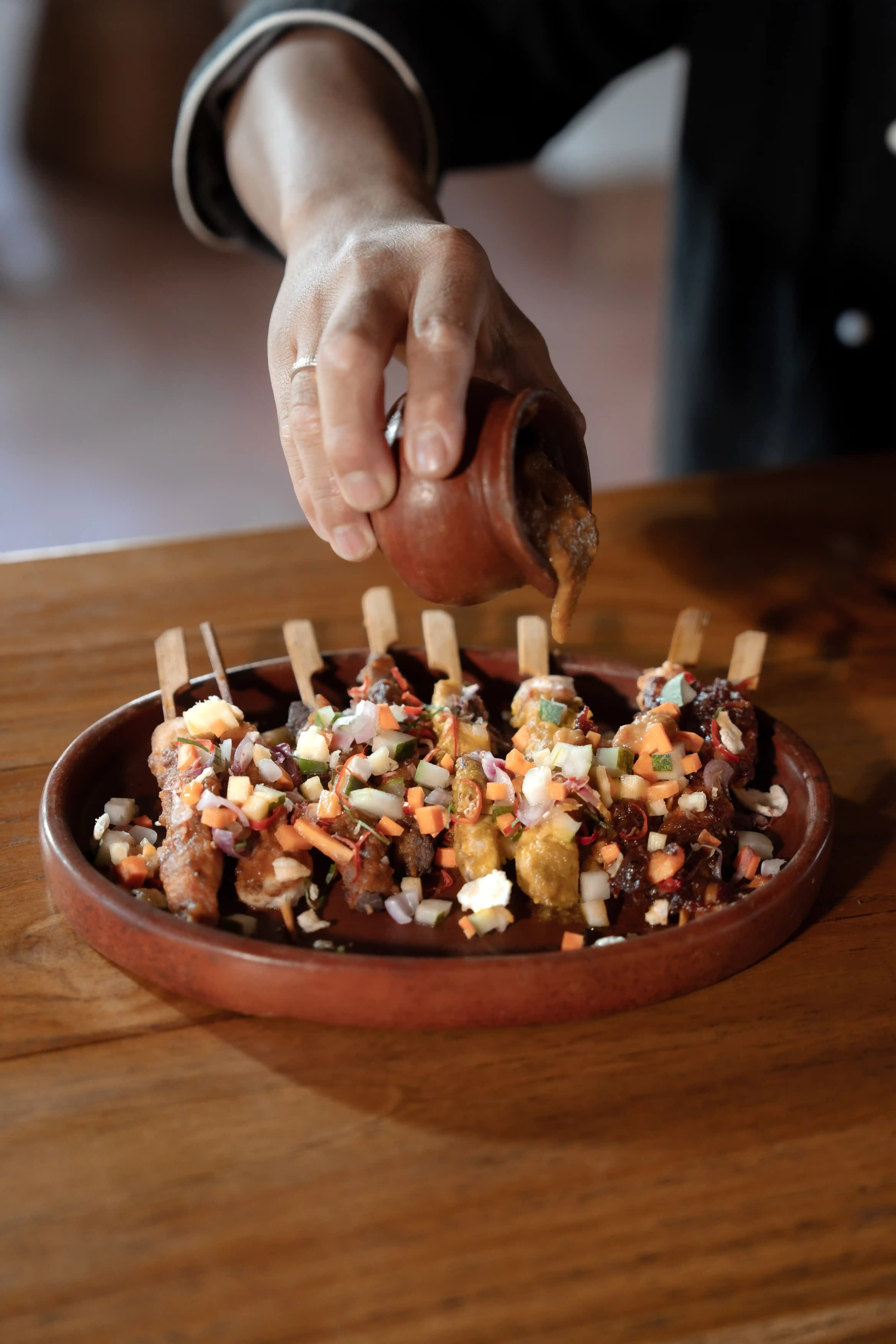
Sate Campur
Spicy Peanut Sauce (Sambal Kacang)
Ingredients
- 250gr peanuts
- 2 1⁄2 cup water
- 8 shallots roughly chopped
- 4 garlic cloves roughly chopped
- 2 1⁄2 cm galangal roughly chopped
- 2 1⁄2 cm ginger roughly chopped
- 3 lemon grass roughly chopped
- 100gr red chilli roughly chopped
- 100 gr palm sugar (gula melaka)
- 3 tbsp tamarind pulp
- 1⁄2 tbsp salt
Method:
- Roast peanuts in the oven until golden brown.
- Blend roasted peanuts with water. For a smooth peanut sauce, blend until smooth. Set aside.
- Cut shallots, garlic, galangal, chili, ginger and lemongrass into thin slices. Put them into the blender along with dried shrimps and water. Blend finely.
- Heat 2 tablespoons of oil over a medium heat, add blended ingredients. Sauté over medium heat for 5 minutes.
- Add blended peanuts into the pot. Stir and allow the mixture to cook for about 5 min over medium heat. Add water and increase heat to high until the sauce boils. Once it begins boiling, reduce heat to medium and simmer for another 10 min. Keep stirring to avoid burning. Add small chunks of gula melaka into the peanut sauce. Stir until sugar dissolves.
- Meanwhile, mix warm water with the tamarind pulp. Remove seeds and add tamarind mixture into the peanut sauce. Cook for another 10 minutes. Season with some salt. Serve warm.

mylombok
Discover this accommodations




Stir it up
Klub Kembali - Stories and recipes from a bar owner in paradise…
Travel beyond the polished version of paradise and discover how unexpected detours, local connections and unplanned experiences can reveal a more authentic side of Lombok.

Restaurants
PRONTO Pizza - Selong Belanak
A taste of authentic Italy with a tropical twist
Restaurants
L’Osteria dell’Isola Restaurant - Gili Trawangan
Hidden authentic Italian foodie haven
Stir it up
Klub Kembali - Arak Anthropology
As many of you know, I like arak. I like the taste, the culture, the history, the people who make it… pretty much all of it I find amazing and inspiring. And something worthy of learning more about and sharing with people who visit Lombok. To make this easier for us and our guests we’re jumping in with both feet!