Chef Nasir - Jeeva Resorts
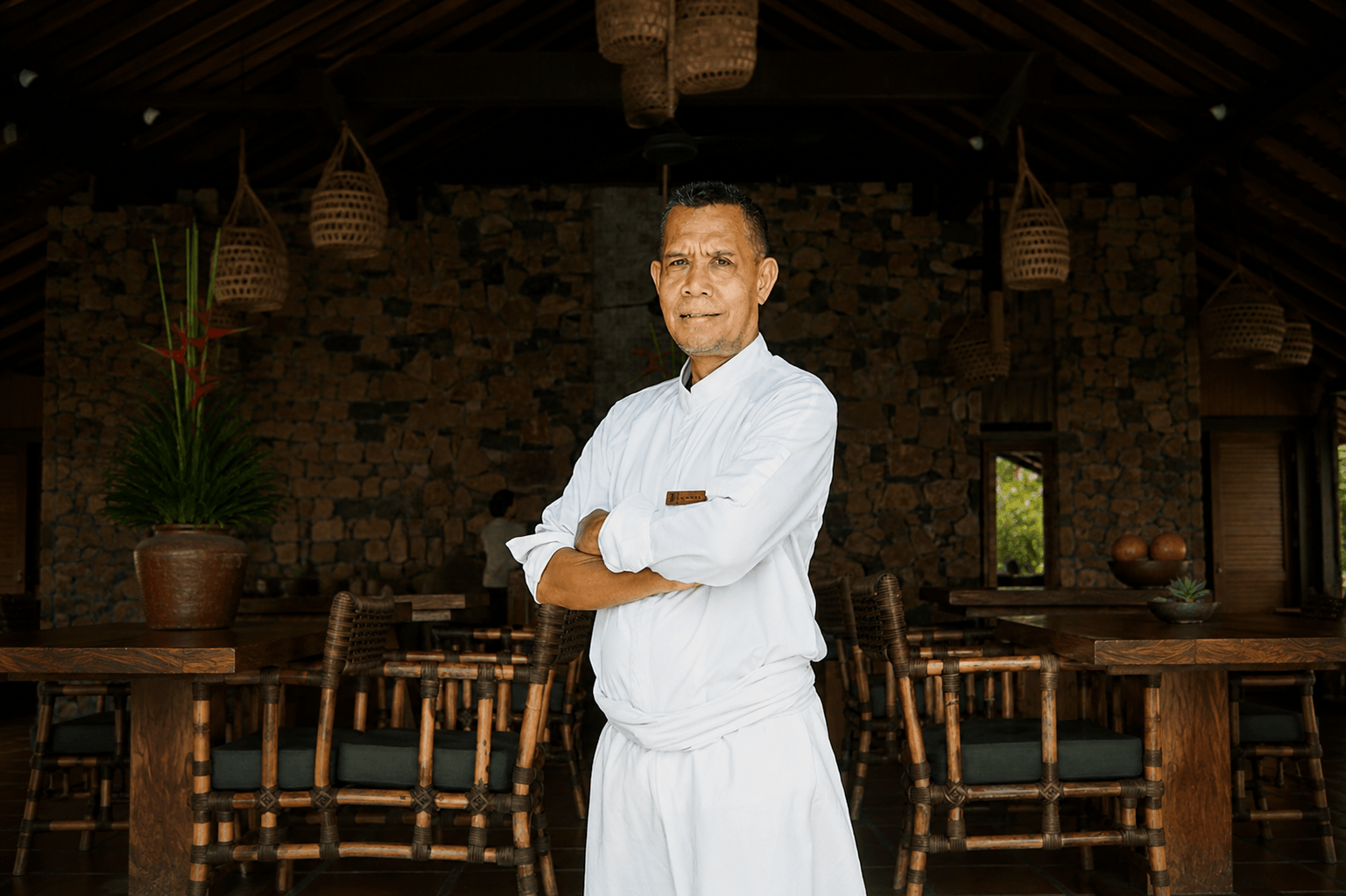
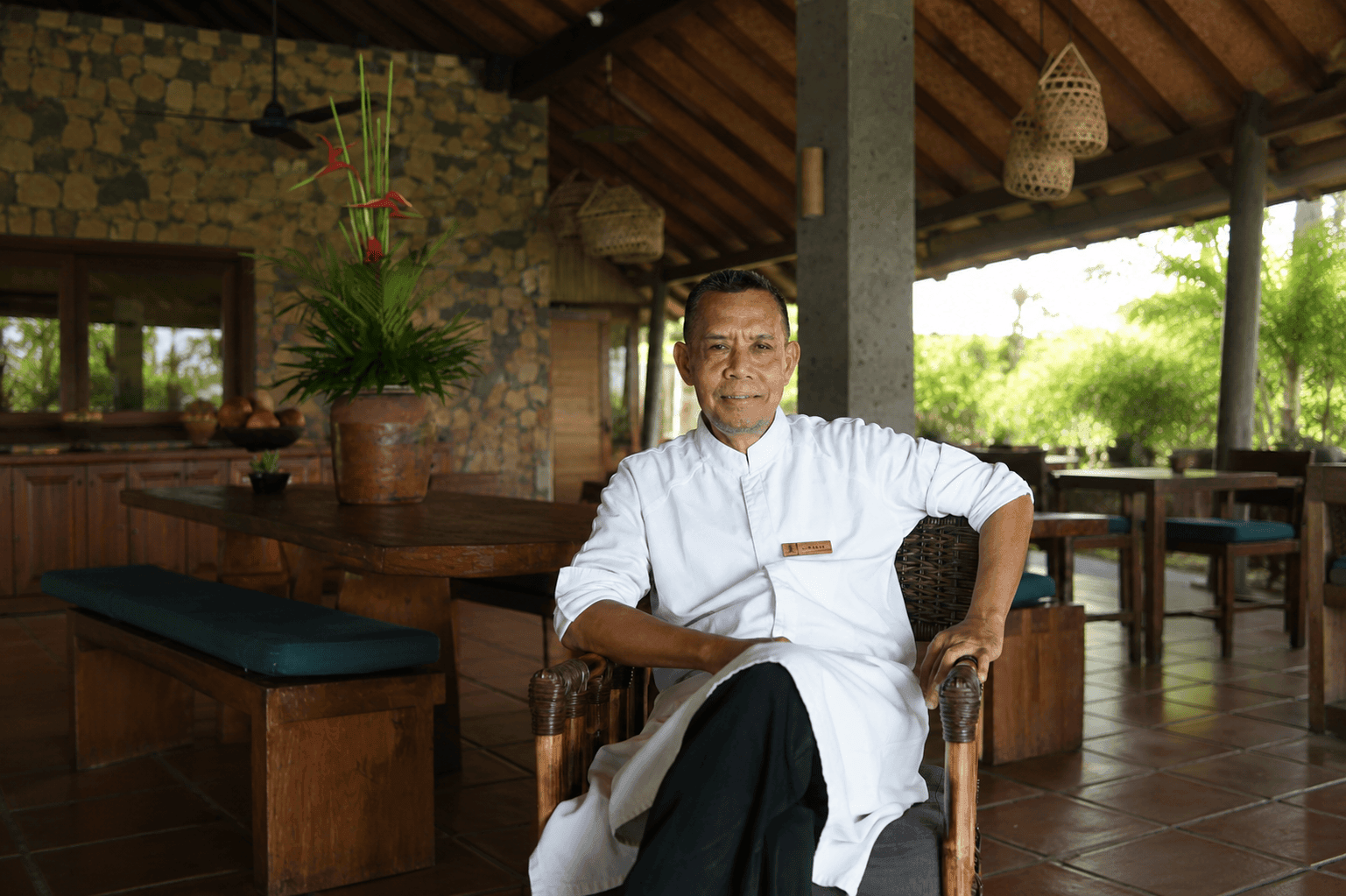
Lalu Nasir was born in Central Lombok. From an early age, he developed a love of food and cooking, and for more than 25 years it has taken him around the world. He now brings his skills and experiences to the Jeeva Resorts restaurants in Kuta, Lombok, where he is the corporate executive chef.
He spoke with mylombok about what has become a passion and a way of life.
When did your interest in food begin?
I have always liked food. It was a major interest from the very beginning. I grew up watching and learning from my mother. Every day she would cook local food in a very simple kitchen. I suppose it was then I started to dream about becoming a cook. I started cooking when I was about 12 years old and afterwards we would eat what we had cooked. The first thing I made was soto ayam, a traditional chicken noodle soup.
Was there a particular moment when you decided you would make cooking your career?
Surrounded by the aromas, the textures and the energy of a working kitchen sparked something in me. It wasn’t just the food that fascinated me; it was a way of making people happy through food. During my early teens, I realised that cooking was more than honouring a family legacy; it was a form of expression for me. And that’s when I decided to make it my profession.
Tell us about your career and some of the places you have worked
I took my skills overseas and I worked in Dubai, Bhutan, Brunei Darussalam, Nigeria, Jeddah, Jakarta and Bali. I learned a lot, and I think my expertise is in blending traditional culinary techniques with global trends. That’s how I come up with innovative and sophisticated dishes that guests love.
I’ve brought this experience to the Jeeva Resorts, where I now oversee operations in the restaurants.
How would you describe or define your style of cooking?
I would say my cooking style could be defined as freestyle or intuitive. It’s certainly an evolving thing. I try to blend creativity with practicality, and my emphasis is always on using fresh and seasonal ingredients, developing flavours, and transforming cooking from a daily task into something that can express personality and culture.
Where do you find inspiration for your dishes?
I find inspiration in all sorts of things. Sometimes it’s about sensory experiences, memories and nostalgia; sometimes it’s a more structured creativity. I ask ‘what if” questions – for example, about the way textures and flavours interact.
I’m also influenced by nature, the changing seasons and the produce that’s available. I love to eat out and research different foods. Going to the markets and having everyday conversations spark ideas too. I might smell a spice on a street corner or find an interesting texture … and that becomes the starting point for a dish.
Do you have a particular ‘philosophy of cooking’?
Yes, I’d say respect for the produce comes first, then comes creativity. I want guests to feel something and to have a sense of place or memory sparked by each dish. Dining isn’t simply about flavour; it’s also about experience.
What’s the best piece of cooking-related advice you’ve ever received?
‘Let the ingredients speak for themselves’. It sounds simple but it’s great advice. It can take years to understand exactly how to do it.
Tell us briefly about the concept for the menu at the Jeeva Resorts restaurants
We focus on blending top-quality, local, seasonal ingredients with thematic, high-impact flavours. That’s what creates a memorable dining experience. We specialise in farm-to-table, classic comfort food. It’s a modern fusion style, offering a mix of a la carte and fixed-price tasting menus to suit various occasions.
Which dishes do you most like to cook?
I enjoy preparing dishes that require precise techniques with space for artistry – for example, delicate consommés, vegetable-focused courses or traditional ‘home-cooked-style’ dishes made from fresh foods that I pick myself from the fields.
What are your favourite ingredients?
I’m fascinated by yuzu, an Asian citrus fruit. I love ingredients that are versatile and flavour-enhancing, such as garlic, ginger and onions, and umami-boosters (soy sauce, fish sauce, chicken bouillon), as well as essential fats (olive oil, butter) and pantry staples (eggs, rice, dried beans). These give depth and basic flavour to so many dishes. I also love fresh seafood, seasonal vegetables and fresh herbs.
Which are your ‘must-have’ kitchen gadgets?
A chef has to focus on efficiency and versatility. ‘Must-have’ items include a high-quality chef’s knife, an instant-read thermometer (e.g. Thermapen), a food processor, non-stick pans and a sturdy cutting board. These tools streamline preparation, improve accuracy and make cooking easier.
Describe a typical day at work.
It usually spans eight hours or more. I begin by checking operations, reviewing priorities and planning tasks for the day. Mornings and evenings are about serving our guests and making sure our teams collaborate; the afternoons involve meetings, analysing data, and doing paperwork. The routine includes a lunch break and finishes with any follow-up we have to do.
What is the most rewarding thing about your job?
Having a tangible, positive impact, solving complex problems, and working as a team. It’s great to receive recognition for our work, achieving work-life balance, and seeing the direct results of our efforts on our clients and colleagues. There’s also personal growth through continuous learning.
What is the biggest challenge?
Maintaining consistency is a continuous challenge. Every guest deserves the best every single time. Achieving that requires passion, discipline and a strong team.
And because I am the chef in three restaurants, it’s really important to delegate and trust, to standardise and centralise our operations, and to have really good communication.
What are your hopes and plans for the future?
I want to keep refining what we do in Lombok and to collaborate more globally, while maintaining a good work-life balance. My future plans are to focus on stability, career advancement and financial independence but also to achieve personal growth and happiness, and improved physical and mental health.
What do you like most about living in Lombok?
Living in Lombok has been the best career decision I’ve made. It means I can stay close to my family.
Apart from cooking and creating dishes, what other things do you really enjoy?
I enjoy travelling. It keeps my perspective fresh. I also love Lombok and I often explore local food and learn from my grandmother. I enjoy quiet moments with good music, good Lombok coffee, and great views.
What foods do you really love to eat?
My favourite foods are what my mother and my wife cook, such as nasi ebatan, a tasty rice and vegetable dish.
If there were no limits or barriers, who you would love to cook a meal for, and who would you choose to cook for you?
I’m not particular. I cook for anyone who needs me, especially since I work in the hotel industry.
I’d love to eat a meal cooked by Thomas Keller, an American chef, or the French chef, Raymond Blanc; his approach to vegetables is really inspiring.
Who is your favourite celebrity chef?
There are many good chefs but I really like Gordon Ramsay; he’s a favourite for his high-energy, his Michelin-starred expertise and his mentorship in shows such as MasterChef. Other favourites are Guy Fieri for his charismatic, casual style, Anthony Bourdain for his down-to-earth perspective, and Julia Child for her legacy.
What would you say are the most important qualities that make a successful chef?
Artistic passion, technical mastery, and strong leadership. Beyond just knowing how to cook, a successful chef must know how to manage a high-pressure environment, foster teamwork, and maintain a sustainable business.
If you hadn’t become a chef, what do you think you would be doing right now?
If I hadn’t become a chef, I would be doing something creative or perhaps have an analytical role that allowed me to work or teach. I’d like to develop young chefs.
Do you have any tips for budding chefs?
Yes, several things: show up early; perfect your knife skills; taste everything; never stop learning – learn techniques, not just recipes; clean up as you go; be patient; stay humble; keep your passion; don’t burn your bridges and work hard.
To bring the conversation from words to the plate, chef Nasir shares one of his signature recipes below.
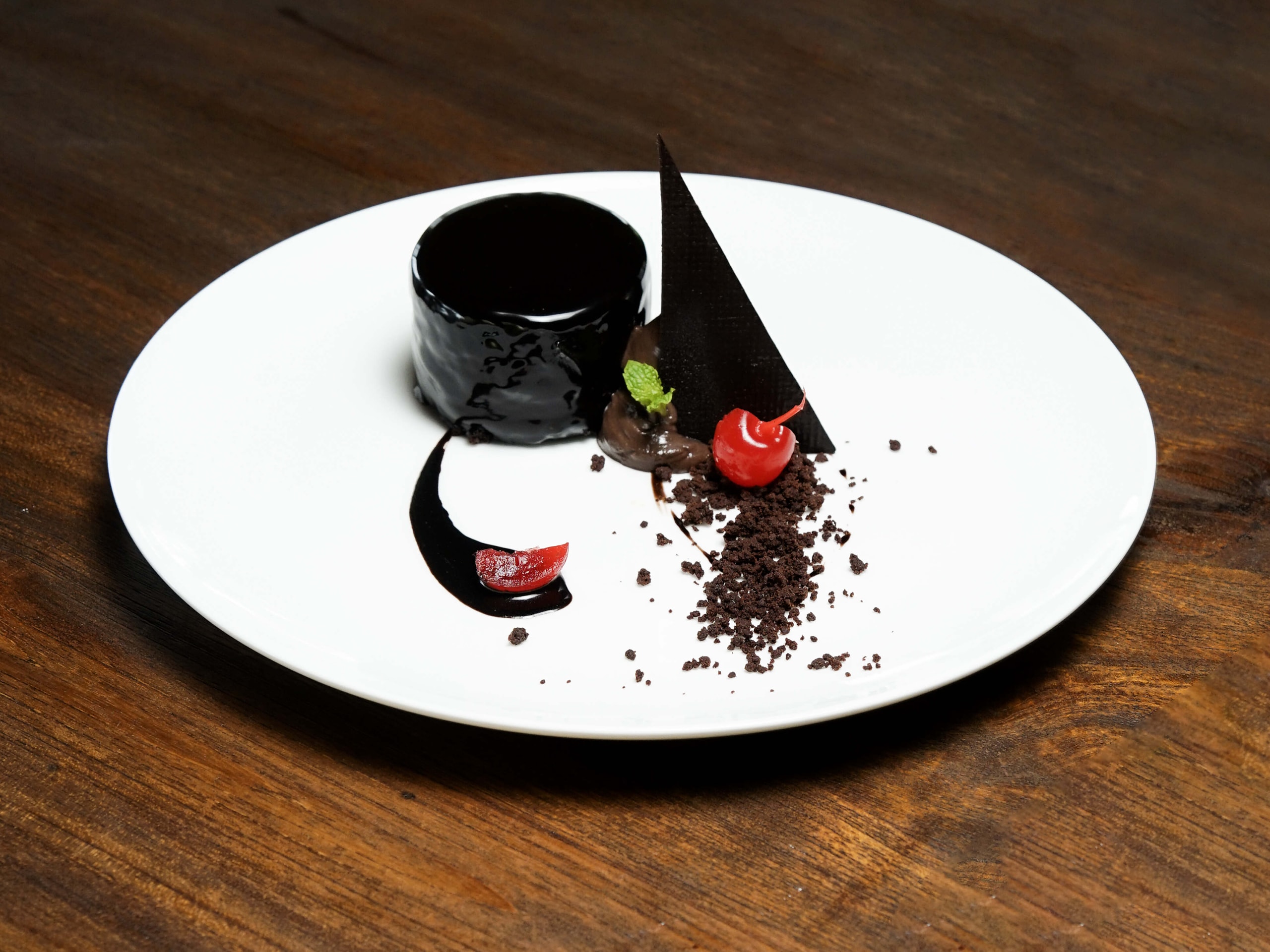
Chocolate date cake
Ingredients
- 150 gr butter
- 75 gr sugar
- 180 gr egg yolk
- 150 gr 65% chocolate
- 270 gr egg white
- 75 gr sugar
- 75 gr flour
- 1.3 gr baking powder
- 150 gr almond powder
- 30 gr date syrup
- 400 gr dates
Method
- Whisk the butter with the sugar until pale and creamy.
- Melt the chocolate.
- Whisk the egg white with the sugar until stiff.
- Add the chocolate and egg yolk to the whisked butter and sugar, then carefully add to the meringue mixture.
- Last add the flour, baking powder, almond powder & date syrup.
- Cut the dates into small pieces.
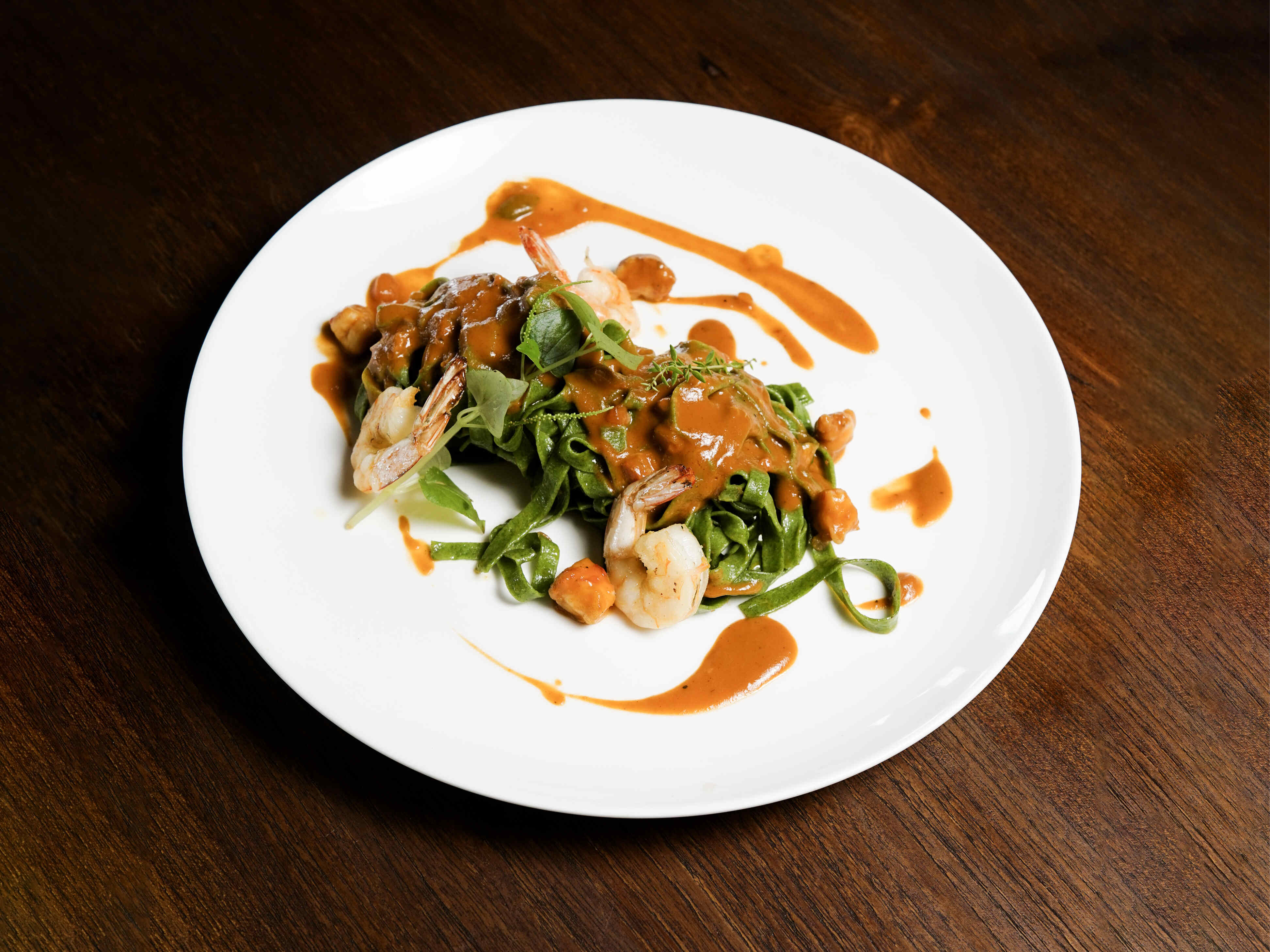
Fettuccine verde tossed with prawns
Ingredients
- 4 gr butter
- 0.04 l olive oil
- 15 gr shallots chopped
- 15 gr garlic sliced
- 12 gr Roma tomatoes skinned, seeded & chopped
- 0.2 l white wine
- 2 ml lemon juice
- 5 gr fresh sage
- 0.8 kg fresh prawn cubed
- 0.3 kg arugula
- 3 gr capers
- 1 gr parsley chopped
- 32 gr homemade spinach Fettuccine Verde
Method
- Melt butter with olive oil in a heavy large skillet over medium heat.
- Add shallots and garlic – sauté.
- Add tomatoes and cook just until tender. Increase heat to medium-high.
- Add wine, lemon juice and sage, then let simmer.
- Add the prawns and simmer until almost cooked through, stirring occasionally.
- Add arugula, capers and parsley to prawn mixture.
- Simmer until prawns are just cooked through and arugula is just wilted, about 2 minutes.
- Season to taste with salt and pepper.
- Cook fettuccine in large pot of boiling salted water until tender but still firm to bite, stirring occasionally.
- Drain pasta well and return to pot. Add prawn-arugula mixture to pasta and toss to coat.
- Serve warm.

mylombok
Discover this accommodation
Related business directory




Chefs
Chef Phil Mowforth – Cocana Resort and Kuara Lombok
Meet Chef Phil Mowforth, Executive Chef for The Guest Society, as he shares his culinary journey, cooking philosophy and work across Cocana Resort and Kuara Lombok.
Stir it up
Klub Kembali - Stories and recipes from a bar owner in paradise…
Travel beyond the polished version of paradise and discover how unexpected detours, local connections and unplanned experiences can reveal a more authentic side of Lombok.

Restaurants
PRONTO Pizza - Selong Belanak
A taste of authentic Italy with a tropical twist
Restaurants
L’Osteria dell’Isola Restaurant - Gili Trawangan
Hidden authentic Italian foodie haven