Indonesia Wants Investment — But What Kind of Investment?

For tourism, real estate and hospitality, attracting capital is only the beginning. The real test is whether an investment can enter correctly, operate successfully, create sustainable value and eventually exit with confidence. Part one asks what the 2026 figures actually say about the capital arriving in Indonesian tourism, and why an investment has to be underwritten as a lifecycle rather than as a transaction.
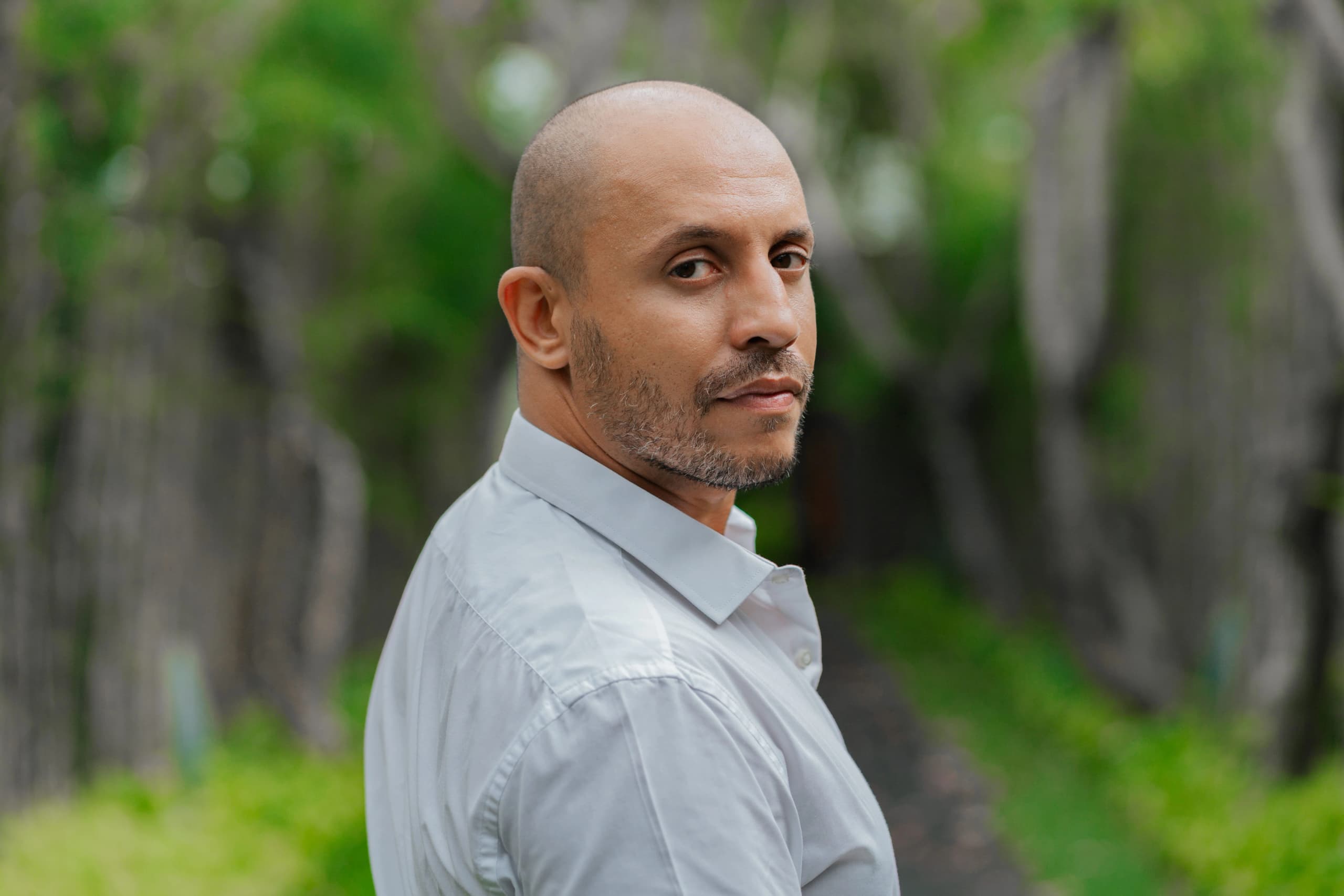
By Ilyas Najim, Managing Director — MMI-Advisors
The capital is arriving
Indonesia does not have a capital-attraction problem. Whether it has a capital-productivity problem is the more interesting question, and one the tourism sector should take seriously before it congratulates itself on its growth rate.
During the first half of 2026, realised investment reached IDR 1,010.6 trillion (approximately USD 57.0 billion), 7.2% higher than a year earlier. Foreign investment represented IDR 507.6 trillion (approximately USD 28.6 billion), marginally exceeding domestic investment at 50.2% of the total, with reported labour absorption of more than 1.4 million workers.[1] A note on what those figures are: BKPM’s realisation data are compiled from company reporting through OSS, and the labour figure is self-reported absorption spanning construction and operating phases. Neither is Bank Indonesia’s balance-of-payments foreign direct investment, which is compiled differently and is materially smaller. Commentary treats the two as interchangeable. They are not.
The composition is revealing. Investment was led by basic metals and related industries at approximately IDR 150.4 trillion (USD 8.5 billion), followed by other services, strongly influenced by data-centre development at around IDR 114 trillion (USD 6.4 billion) and mining at approximately IDR 105 trillion (USD 5.9 billion). Downstream industries absorbed IDR 300.1 trillion (USD 16.9 billion), almost 30% of the national total.[1]
That composition has an arithmetic consequence. Across the economy, IDR 1,010.6 trillion of realised investment sat alongside 1.4 million reported jobs: roughly IDR 722 million, or about USD 40,700, of capital per job. Exactly what a half-year led by smelters, mines and data centres should look like. Indonesia is not simply trying to attract capital. It is trying to attract capital that creates domestic value, and tourism should be measured against that standard rather than exempted from it.
The origin of foreign capital deserves similar precision. Singapore remained the largest reported foreign investor at approximately IDR 156.0 trillion (USD 8.8 billion), followed by Hong Kong at IDR 134.7 trillion (USD 7.6 billion), China at IDR 69.1 trillion (USD 3.9 billion), Japan at IDR 33.7 trillion (USD 1.9 billion) and the United States at IDR 30.1 trillion (USD 1.7 billion).[4]
Singapore and Hong Kong together account for roughly USD 16.4 billion, some 57% of reported foreign realisation. Nobody in this industry believes that is Singaporean and Hong Kong money. These are the domiciles of the holding vehicles, not the origins of the capital, chosen for treaty position, shareholder-agreement law, arbitration seat and exit mechanics. That is not a criticism. It is the first evidence in these statistics that structuring decisions are made long before a project breaks ground.
Tourism’s share, and the gap that matters
Tourism is not Indonesia’s largest investment sector and probably never will be. In the first half of 2026, tourism investment reached IDR 39.68 trillion (approximately USD 2.24 billion), roughly 3.9% of national realised investment but growth of 16.64%, more than twice the rate of total investment. Foreign investment into tourism reached IDR 12.19 trillion (USD 688 million), up 37%, with domestic investment at IDR 27.48 trillion (USD 1.55 billion).[2]
Set that against demand. Indonesia welcomed 7.45 million international visitors in the first half of 2026, the strongest first half since 2020 but growth of 5.71%, and June alone recorded 1.39 million arrivals, 2.15% below June 2025. Domestic travellers generated 630.41 million trips. Accommodation and food-service activities expanded 11.83% during the first semester, against overall economic growth of 5.45%.[2][3][5]
Read together, these numbers say something the sector rarely says out loud. Tourism capital is currently forming roughly three times faster than measured international demand is growing, and the strength of the accommodation economy is being carried substantially by 630 million domestic trips rather than by foreign arrivals, which have flattened at the margin.
This is not an argument against investing. It is an argument about what to invest in, and it should change three things in an underwriting model: the weight given to domestic demand in the segmentation, the caution applied to international-arrival growth assumptions, and the honesty of the competitive-supply analysis in any submarket where announced pipeline is running ahead of measured absorption.
It also frames the real case for tourism, which is not scale but transmission. Hospitality investment circulates through construction, architecture, furniture, food production, transport, technology, restaurants, wellness, retail and countless smaller businesses. That claim is usually asserted. It can be measured. The Mandalika offers an indication: cumulative investment of approximately IDR 6.02 trillion (USD 340 million) at end-2025 alongside 26,002 jobs across the wider development ecosystem, roughly IDR 231 million, or about USD 13,000, of capital per job.[6] The comparison with the national figure is indicative rather than exact, but the order of magnitude is the point. Tourism appears to convert capital into employment at something like three times the national rate.
If the Ministry of Tourism published labour absorption alongside its investment figures, the sector could make this argument with a number instead of a list. It is the strongest argument tourism has in a policy environment organised around downstreaming, and it is currently being made rhetorically.
Investment should be underwritten as a lifecycle
An investment is not a transaction. It is a lifecycle: acquisition and structuring, development, operations, years of active management, and eventually a transfer, refinancing or exit.
These stages appear sequential but must be analysed simultaneously. Before acquiring a property we should already understand how it will operate. Before finalising the operating strategy we should understand who might one day acquire it. And before thinking about that buyer, we need to ensure the architecture established at entry will survive due diligence many years later.
Too many investments are structured around the first transaction alone: secure the land, reduce the acquisition cost, incorporate the company, and begin construction. The shortest path to entry can appear the most efficient. A structure that saves a modest amount at acquisition but later restricts operations, creates governance problems, complicates repatriation, introduces tax exposure or reduces transferability may destroy considerably more value than it saved.
Tax belongs in that architecture from the first day. In Indonesian hospitality it is frequently what separates two structures with otherwise identical operating economics:
- PBJT. Under Law 1/2022 on Financial Relations between Central and Regional Government, the former hotel and restaurant taxes were consolidated into the tax on specific goods and services, levied at regency or municipal level within a statutory ceiling. The applicable rate is a local variable, one of the more concrete differences between developing in one regency and the next.
- VAT. Accommodation and food-and-beverage delivered by the hotel fall outside VAT precisely because they are subject to PBJT. Management fees, licence fees and most third-party services do not. Structures that push revenue through a services company can inadvertently convert non-VATable revenue into VATable fees.
- Rental income. Final income tax on land and building rental applies to passive letting. It does not describe a villa sold nightly through an online travel agent, which is an accommodation business, a distinction with consequences well beyond tax.
- Repatriation. Corporate income tax at 22%, then withholding on dividends to non-residents unless reduced by treaty. This is the arithmetic behind the Singapore and Hong Kong figures above.
None of this needs to be resolved perfectly at entry. All of it needs to be priced at entry. The objective of structuring is balance: legal certainty, tax efficiency, investor protection, governance, operational capacity, bankability, flexibility and eventual liquidity. The most sophisticated structure is not necessarily the best one. The best structure is the one that remains resilient across the entire life of the investment.
At the development stage a new layer appears. Land rights must align with spatial planning; the activity must be compatible with the zoning; PBG, SLF, environmental requirements, access, utility capacity, engineering and financing must converge around an asset that can be built legally and economically. This means thinking beyond the building. Wastewater, solid waste, fire and life safety, security, accessibility, water supply, energy and the impact on neighbouring communities are not matters to address shortly before opening. They belong in the original design brief, because they affect CAPEX, licensing, operations, insurability and ultimately value.
The building creates capacity. Operations create the return.
A shopping centre can operate for decades. So can a villa, an office building, a serviced residence. Longevity is not what distinguishes hospitality. The distinction lies in the intensity with which the operating business determines the yield generated by the real estate.
A hospitality asset is monetised every day. Rooms are sold repeatedly, pricing changes continuously, distribution must be managed, staff shape the product, food and beverage strengthens or weakens profitability, and management discipline converts revenue into cash flow. A beautiful building without a functioning business inside it may have considerable replacement cost and very little investment performance. Operational strategy therefore belongs at the beginning.
An owner may operate directly, and an effective owner-operator model creates exceptional alignment because strategic intent, capital allocation and operational decision-making sit close together. But ownership does not confer operational expertise. The alternative is a professional operator, through a management agreement, franchise, independent platform or lease and selection is too often approached through brand recognition, proposed ADR and fee structure. Those matter but are not sufficient. The owner and operator must share an understanding of the investment thesis, and must be able to work together for over ten years. Personalities matter, corporate cultures matter, the capacity to disagree constructively matters. A highly regarded operator can be the wrong operator for a particular developer, just as an excellent development team can be the wrong partner for a particular brand.
Professional asset management connects these interests. The operator runs the business, ownership provides capital and direction; the asset manager continuously tests whether operating reality still matches the original thesis, challenging budgets, benchmarking assumptions, understanding costs rather than simply cutting them, anticipating CAPEX, protecting FF&E reserves, and evolving positioning before the property becomes obsolete. Without good operations there is no sustainable yield, and without credible, repeatable cash flow the investment becomes considerably harder to exit at the valuation originally envisaged.
Exit begins at acquisition
Development proves that an asset can be built. Operations prove that the investment works. Exit reveals how much value the two created together and exit does not begin when the property is placed on the market. It begins at incorporation, because in Indonesia the choice between selling shares and selling assets is effectively made years before anyone contemplates a sale.
Three points deserve to be modelled rather than assumed.
The transfer-cost differential. An asset transfer attracts acquisition duty on the buyer and final income tax on the seller, together with a meaningful percentage of consideration; a share transfer follows a lighter path. On a mid-sized resort that is a line item capable of moving the achievable net price.
The licence chain. A share transfer preserves the company, and with it the NIB, the business licences and the operating history attached to them. An asset sale re-tests every permit against the rules applicable on the day of transfer which, following a change in licensing architecture, is a very different proposition. It is the strongest practical argument for holding an operating hotel in a clean, single-purpose vehicle.
Residual land tenor. More often a modelling question than a legal one, and worth stating clearly because it is frequently overstated. Under PP 18/2021 an HGB runs for thirty years, extendable by twenty and renewable by thirty, with extension and renewal capable of being applied for together. Where the statutory conditions are met, the land still used for its granted purpose, conditions of grant complied with, the holder still qualified, the land consistent with spatial planning and not designated for a public purpose, the process is administrative and, in practice, close to routine.[7] A compliant hotel on correctly zoned land is not an asset at risk of losing its title.
Beyond these, a purchaser will examine not only yesterday’s EBITDA but the quality of tomorrow’s earnings: operating history, licences, tax compliance, contractual obligations, land rights, employee liabilities, CAPEX, building compliance and the governance of the holding structure.
Two hospitality properties can produce identical EBITDA and still be fundamentally different investments. One may be institutionally investable. The other may simply be profitable. The difference is liquidity.
Part two, in the next edition. Part one has been about discipline that applies in any market. Part two turns to the rules that decide whether an Indonesian project can exist at all: the villa question, and the difference between controlling a property, developing it and lawfully operating a business from it. Bali’s closure of OSS licensing to new foreign vehicles this year, and the unresolved question of how far that closure actually reaches, the capitalisation thresholds that determine whether a project qualifies at all, why this market runs on equity rather than debt, who that filters out, and what Bali’s decision means for Lombok.
Sources and methodology
[1] National investment, FDI, sectors and downstreaming. BKPM reported IDR 1,010.6 trillion of realised investment in H1 2026, up 7.2% year-on-year, including IDR 507.6 trillion of PMA and reported labour absorption of more than 1.4 million; downstream investment reached IDR 300.1 trillion. The Presidency separately reported the largest H1 sectors, including basic metals at IDR 150.4 trillion, other services at roughly IDR 114 trillion and mining at IDR 105 trillion. BKPM realisation is compiled from OSS/LKPM company reporting and is not equivalent to Bank Indonesia’s balance-of-payments FDI.
[2] Tourism investment and domestic demand. The Ministry of Tourism reported H1 2026 tourism investment of IDR 39.68 trillion, up 16.64%, comprising IDR 12.19 trillion of PMA (up 37%) and IDR 27.48 trillion of PMDN, alongside 630.41 million domestic trips. The tourism figure is the Ministry’s own aggregation; BKPM’s sectoral taxonomy contains no single equivalent “tourism” line, so the 3.9% share is a cross-source comparison.
[3] Indonesian economic growth. BPS reported 5.45% growth for the first semester of 2026, with accommodation and food-service activities expanding 11.83%.
[4] H1 2026 FDI origins. The Indonesian Presidency reported Singapore at USD 8.8bn, Hong Kong USD 7.6bn, China USD 3.9bn, Japan USD 1.9bn and the United States USD 1.7bn. BKPM reported that Hong Kong moved into first place during Q2 alone. Reported source countries reflect the domicile of the investing entity, not ultimate beneficial ownership.
[5] International arrivals. BPS reported 7.45 million foreign visits for January–June 2026, up 5.71% year-on-year and the highest first half since 2020, with June 2026 at 1.39 million, down 2.15% year-on-year.
[6] Mandalika investment and employment. ITDC reported cumulative investment of approximately IDR 6.018 trillion at end-2025, 27 active business operators and 26,002 jobs. Capital-per-job figures derived from these are indicative only: investment is cumulative across years and employment spans construction and operating phases.
[7] Land tenor. PP 18/2021 provides for HGB of up to 30 years, extendable by up to 20 and renewable by up to 30, with extension and renewal capable of being applied for together. Article 40 conditions extension and renewal on the land remaining properly used and managed, the conditions of grant being met, the holder remaining qualified, conformity with spatial planning, and the land not being designated for a public purpose. HGB over Hak Pengelolaan additionally requires the consent of the HPL holder.
Currency convention. USD equivalents of IDR-denominated figures are indicative and use approximately IDR 17,722 per USD as at 26 August 2026. For figures originally published in USD, the same rate is reversed to present IDR first. Minor differences from government releases can arise where official agencies use different reporting exchange rates.
Note. This article is commentary, not legal, tax or investment advice. Regulatory positions described are current at the date of writing and are moving quickly.

mylombok



Investment
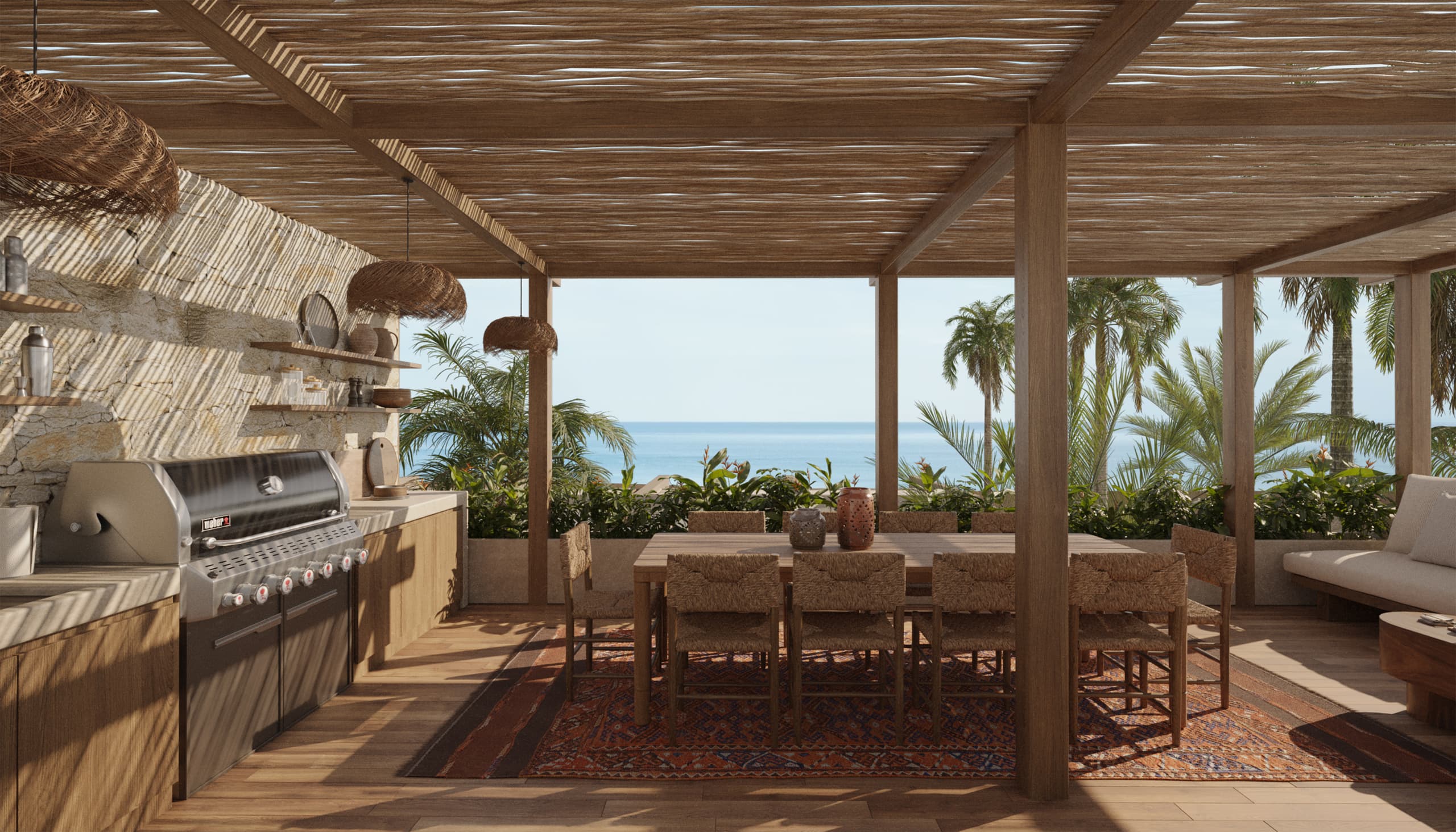
Laga Living - A New Kind of Beachfront Living in South Lombok
Laga Living introduces nine private pool villas on Kuta Beach, combining tropical architecture, private pools and access to sport, wellness, hospitality and the ocean.
Investment
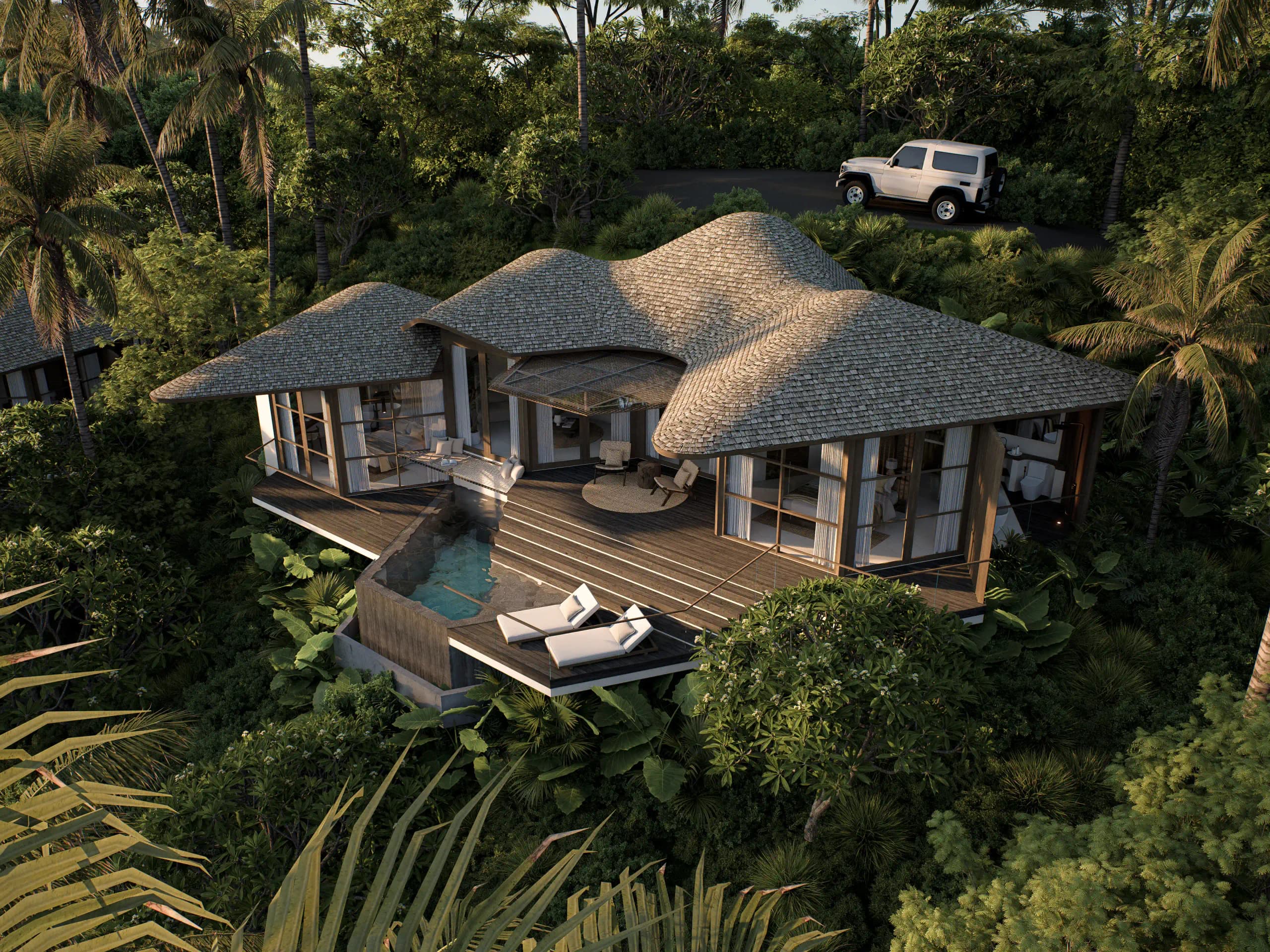
Sustainable Hillside Luxury - Living MAWI VALLEY
Mawi Valley is a sustainable hillside residential community near Mawi Beach, combining private villas, nature, wellness, sports and family-focused living in South Lombok.
Villa
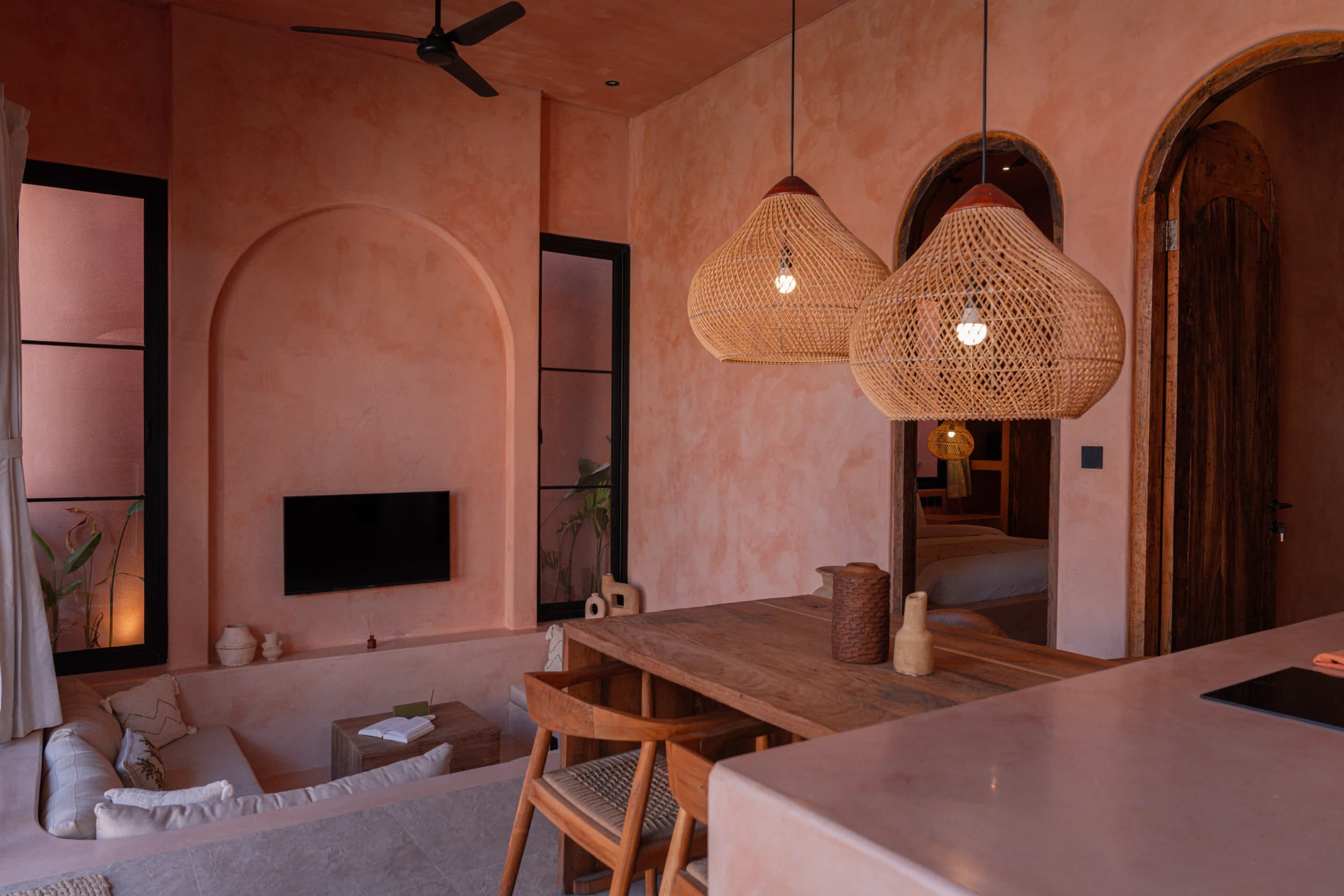
Pilla Villas by Rascals, Kuta
Tranquil terracotta villa haven in the heart of Kuta
Resorts
Kuara Lombok Resort - Hidden boutique oasis evoking the natural beauty and traditions of South Lombok
A secluded beachfront retreat near Gerupuk, Kuara Lombok combines 16 suites and villas, natural design, tropical gardens, distinctive pools, dining and wellness experiences.